What paint actually needs from the weather to cure well
Exterior acrylics have three weather needs. First, the air and the surface should be above the product's minimum, usually 50F for standard lines and 35F for low-temperature formulas, and stay there for several hours after application. Second, the surface should be at least 5F above the dew point so condensation doesn't collect on wet paint and leave surfactant streaks or poor adhesion. Third, the coating needs about four to six hours without rain, sprinkler spray or heavy dew. Upper limits matter too. Most manufacturers cap application around 90F to 95F air temperature, and a sunlit wall can be 30F hotter than the air. We carry an infrared thermometer and check the wall itself, because the forecast high on your phone isn't the number the paint feels.
Month by month: how the Fort Worth calendar plays out
Every year differs, but the general pattern holds from one season to the next. Use this as a planning guide rather than a promise, since one cold front, a late norther or a week of storms can shift any month. What follows is how a typical Fort Worth year treats exterior paint on brick-and-siding homes, wood trim and fences.
- January and February: workable on mild runs with low-temperature paint; watch overnight freezes and short daylight
- March: often excellent once nights stay above 40F; early storms possible
- April and May: prime season, but peak hail and thunderstorm risk means watching radar daily
- June: good mornings, hot afternoons; humidity climbs
- July and August: doable with early starts, shade-chasing and no afternoon work on sunny walls
- September and October: the most dependable stretch of the year for many homes
- November and December: good until nights drop toward freezing; shorter days slow the pace
Working around spring storm season and hail
Spring brings the best temperatures and the worst surprises. North Texas thunderstorms can roll in fast with wind-driven rain and hail, and a coat applied two hours earlier won't survive a downpour without spotting or washing off. We watch hourly forecasts and radar, schedule topcoats for days with clear afternoons, and keep plastic and tarps on the truck. If a storm hits mid-job, we inspect the fresh paint the next day and touch up any damaged areas. Hail also changes the order of work: if a recent storm chipped trim or dented gutters, it's smarter to finish roof or gutter repairs first so new paint doesn't get scratched by other trades. Some homeowners wait until early summer for that reason, especially when a roof claim is still open.
How we paint safely through a Fort Worth summer
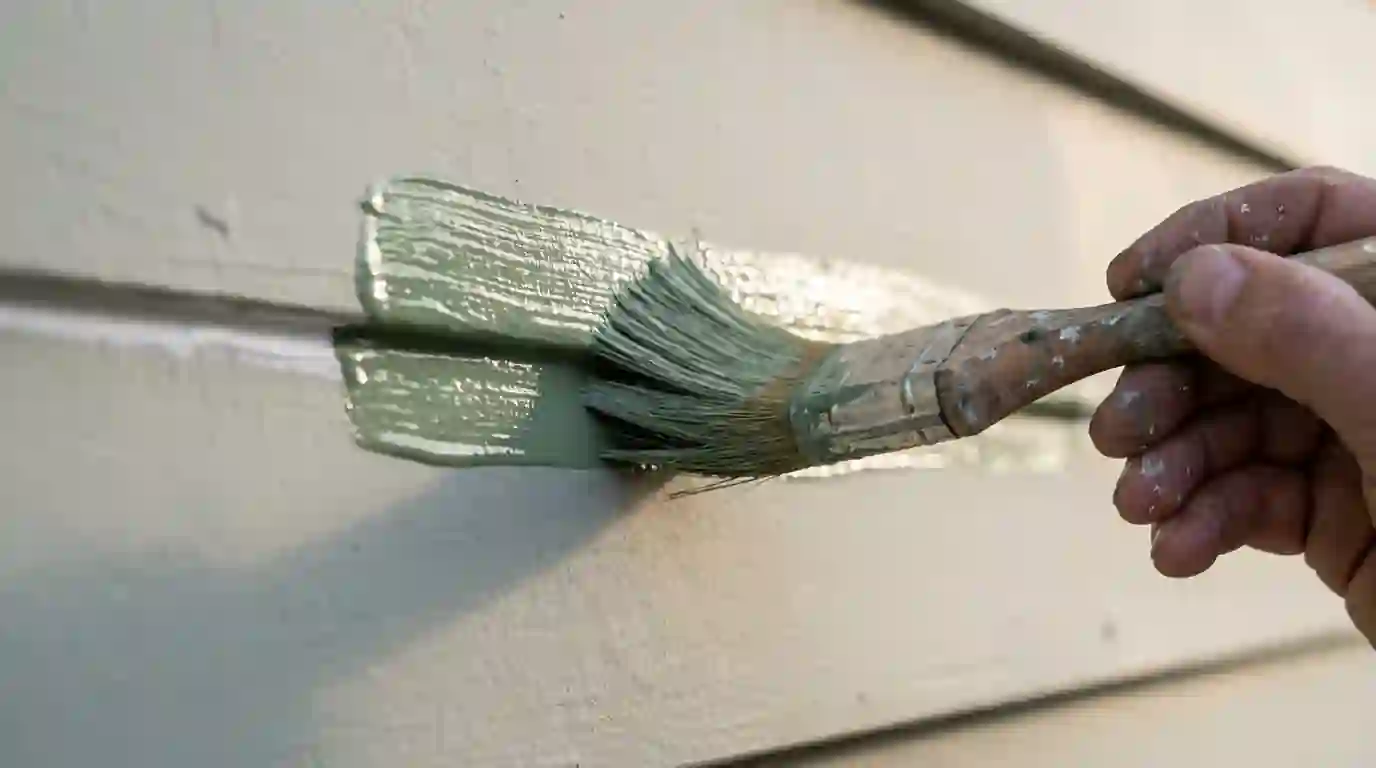
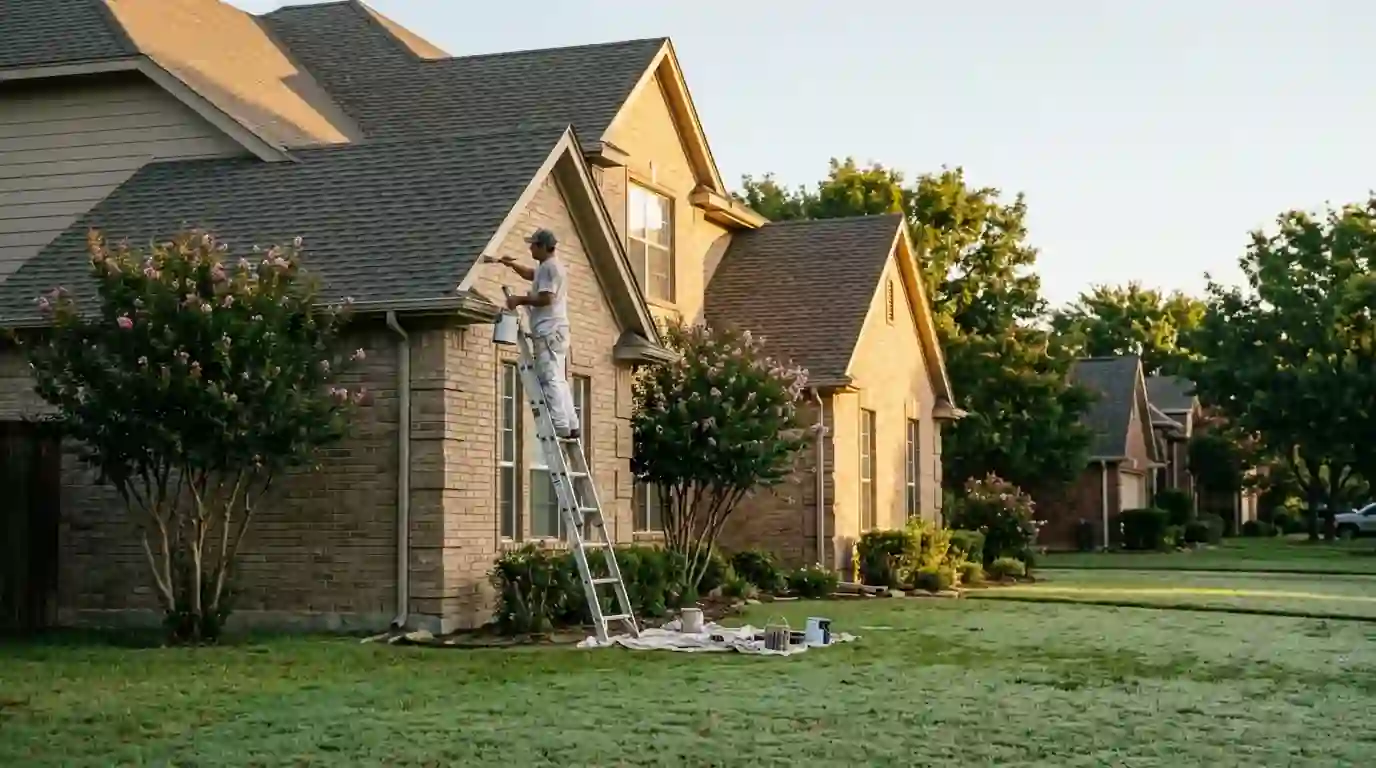
Summer painting is common here, and with the right habits it turns out well. Crews start at first light, often around 6:30 or 7 a.m., beginning on the west side, which stays shaded until early afternoon. As the sun swings, we move to the east and north faces. South and west walls in full sun past noon are off limits because the paint can skin over before it levels, trapping brush marks and causing lap lines. We keep paint in the shade, may add a manufacturer-approved extender to lengthen open time, and avoid working on dark surfaces that are too hot to touch. Afternoon heat also affects people, so crews take water breaks and finish the sunniest work before 11 a.m. A summer job can take a day or two longer than the same job in October.
Can you paint an exterior in a Fort Worth winter?
Yes, on the right days. Fort Worth winters are mostly mild, with many afternoons in the 50s and 60s. Low-temperature acrylics let us apply down to about 35F as long as the surface stays above that and above the dew point while the coat sets. The challenge is nights. If temperatures dip below freezing within a few hours of application, or if a heavy dew settles before the film firms up, adhesion and sheen can suffer. So winter work runs mid-morning to midafternoon, when walls have warmed. Short days mean fewer working hours, and a hard freeze like the February 2021 storm will pause any job. On the plus side, winter calendars open up, and prep work such as rot repair and caulking can move ahead even on cooler days.
Humidity, dew and sprinkler timing most people miss
Even in a dry month, two small details ruin fresh exterior paint. The first is morning dew. On clear spring and fall nights, lawns and lower siding can be wet until 9 a.m. or later, and painting over damp boards traps moisture under the film. The second is lawn irrigation. Many Fort Worth homes have sprinklers that hit the lower 2 feet of siding and garage trim. We ask homeowners to shut off irrigation the night before and for a day after each coat, and to tell us about any automatic schedules. High humidity also slows drying, so on muggy June mornings we wait longer between coats. Watching for surfactant leaching, those sticky tan streaks that appear when moisture hits curing paint, tells us when conditions were marginal.
How far ahead to book and how to plan your slot
Spring and fall fill up first because they're the easiest months to paint. If you want a specific window, such as before a graduation party or before listing a home, it helps to call six to ten weeks ahead in those seasons. Summer and winter dates are usually easier to get on shorter notice. When you book, plan for weather slack: a typical single-story exterior might take three to five working days, but storms or a cold snap can stretch that to a week or two on the calendar. HOA approval in neighborhoods such as Park Glen, Summerfields or Heritage can add a few weeks, so submit colors early. If you'd like help choosing the best window for your home, call us and describe the house and timing.