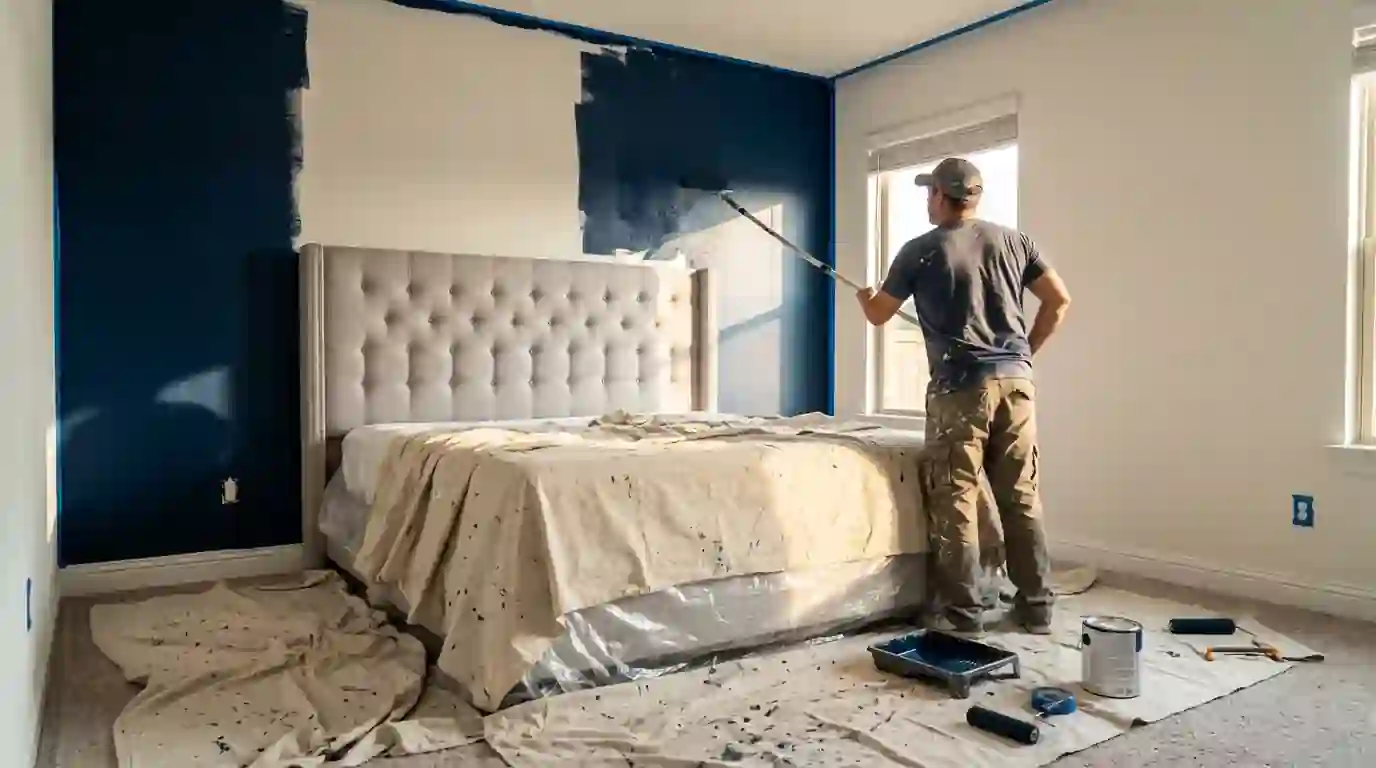
Why deep colors need a tinted primer
Dark blues, greens, charcoals and reds are made with a deep or clear base that contains less white pigment. That's what gives them richness, but it also means they hide poorly. Rolled straight over a white or beige wall, a navy might need four or five coats to look solid. We prime first with a gray-tinted primer chosen to match the depth of the finish color, which brings most deep colors to full coverage in two coats. Very saturated reds, oranges and yellows can still need a third. Using a premium paint line matters more on accent walls than anywhere else in the house. Better deep-base paints have more pigment per gallon and level out more evenly.
How we get a straight line where the color stops
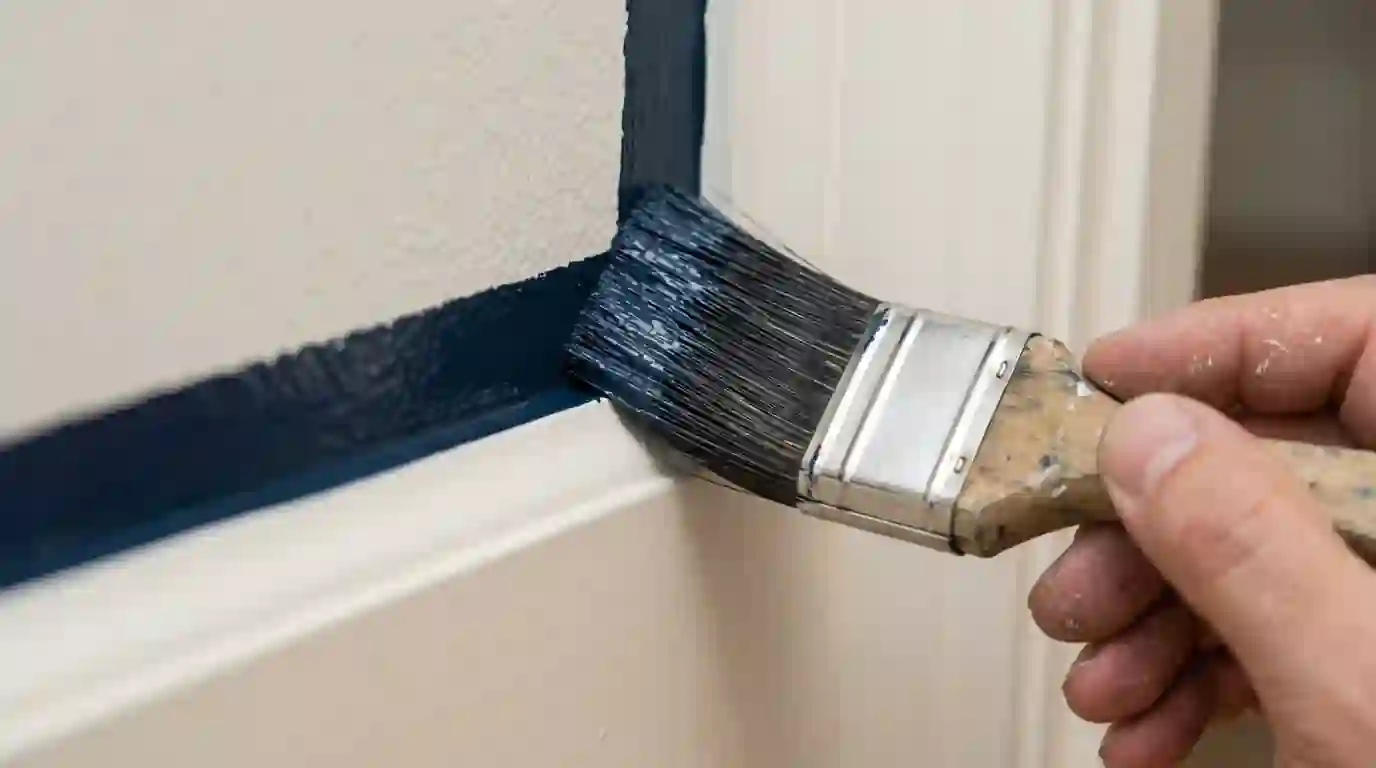
An accent wall is only as good as its edges. At inside corners, we cut the deep color onto the accent wall freehand with a quality angled brush, since tape in a corner tends to bleed into the texture. Where the color stops on a flat plane, such as a color-block line or a stripe, we tape with a sharp-edge painter's tape and then seal the tape edge with the base wall color first. Any bleed is the base color, which is invisible, and the deep color then cuts a clean line. Tape comes off at a low angle while the final coat is still slightly wet, before it can bridge across the edge and tear when pulled.
What accent wall painting typically costs in Fort Worth
$295 to $640
for one painted accent wall up to about 14 ft wide and 9 ft tall. Your price comes from a written scope after we see the job.
What moves the number
- Deep or saturated color needing three coats
- Wall height, such as a two-story stair wall
- Stripes, geometric patterns or color blocking
- Adding board and batten or picture-frame molding
- Patching mounted TV and shelf holes
- Painting nearby walls at the same time
Which wall makes the best accent wall?
The wall your eye lands on first when you walk in is usually the right choice: behind a bed headboard, behind a sofa, around a fireplace or at the end of a long hallway. Walls with windows or many doors break up the color and usually aren't as effective. In open floor plans common in 2000s and newer Fort Worth homes, an accent can also define a dining area or a reading nook without building walls. We'll also look at light, because a deep color on a north-facing wall reads much darker than the same color across from a west window.
- Behind a bed headboard or sofa
- Fireplace walls and built-in niches
- The end wall of a long hallway
- A dining zone in an open floor plan
Board and batten, stripes and color blocking
Many accent projects go beyond flat paint. Board and batten or picture-frame molding adds texture and suits farmhouse and traditional homes, and we install the trim strips, fill nail holes, caulk every seam and paint the whole wall in a single color, usually satin. Vertical or horizontal stripes need precise measuring with a laser level, since a stripe that drifts a quarter inch across a wall is easy to spot. Color blocking and arches are popular in kids' rooms and home offices, and we lay those out with you first in pencil so you can see proportions before any paint goes on.
Sheen choice and touch-ups on dark walls
Deep colors in eggshell or satin show scuffs as shiny burnish marks, while matte hides them but can mark with handling. For accent walls behind beds or sofas, a scrubbable matte in a premium line is often the best balance. Touching up a dark color later is harder than on a light one, because a spot touch-up can flash. We leave labeled paint and recommend touching up corner to corner, rather than a dab, when a mark needs covering.
Signs it is time for accent wall painting
- A large open room that feels flat and without a focal point
- Wall-mounted TV holes and patches you'd like to disguise with color
- A previous accent wall with streaky coverage or fuzzy corners
- A nursery or kids' room ready for a new color scheme
- A home office that looks plain on video calls
- Wanting to try a bold color without committing a whole room
How we handle accent wall painting, step by step
- 1
Choose wall and color
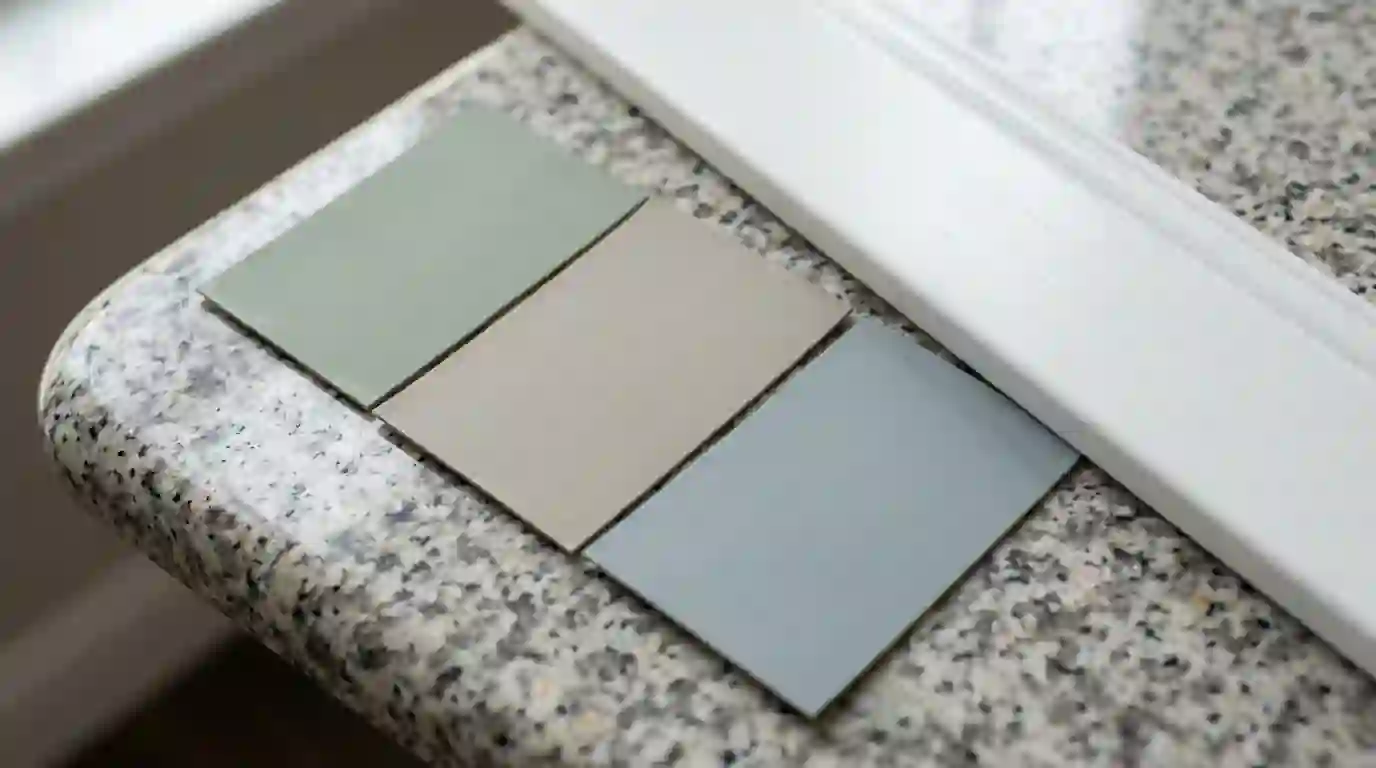
We look at the room's light at different times, help you sample two or three colors on large boards and confirm sheen, design and which wall carries the accent.
- 2
Prepare the surface
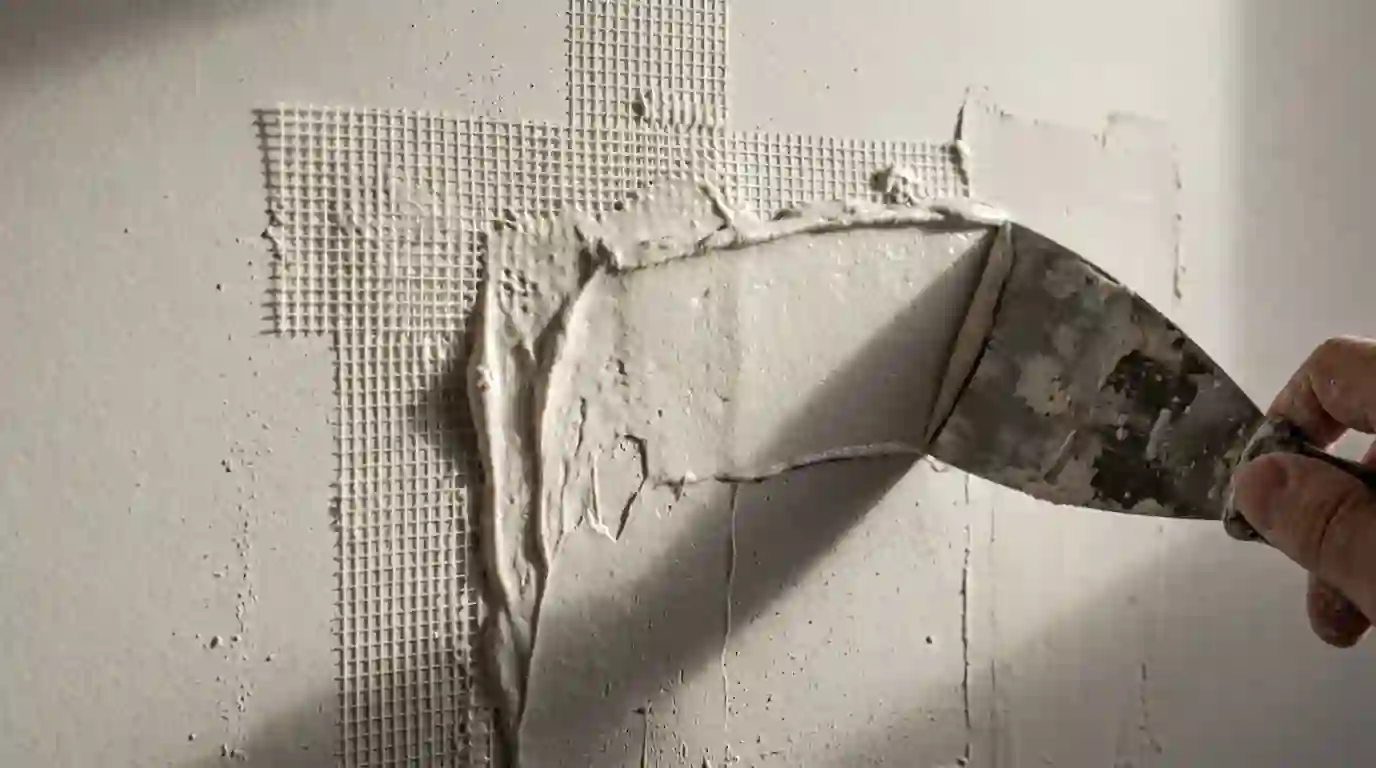
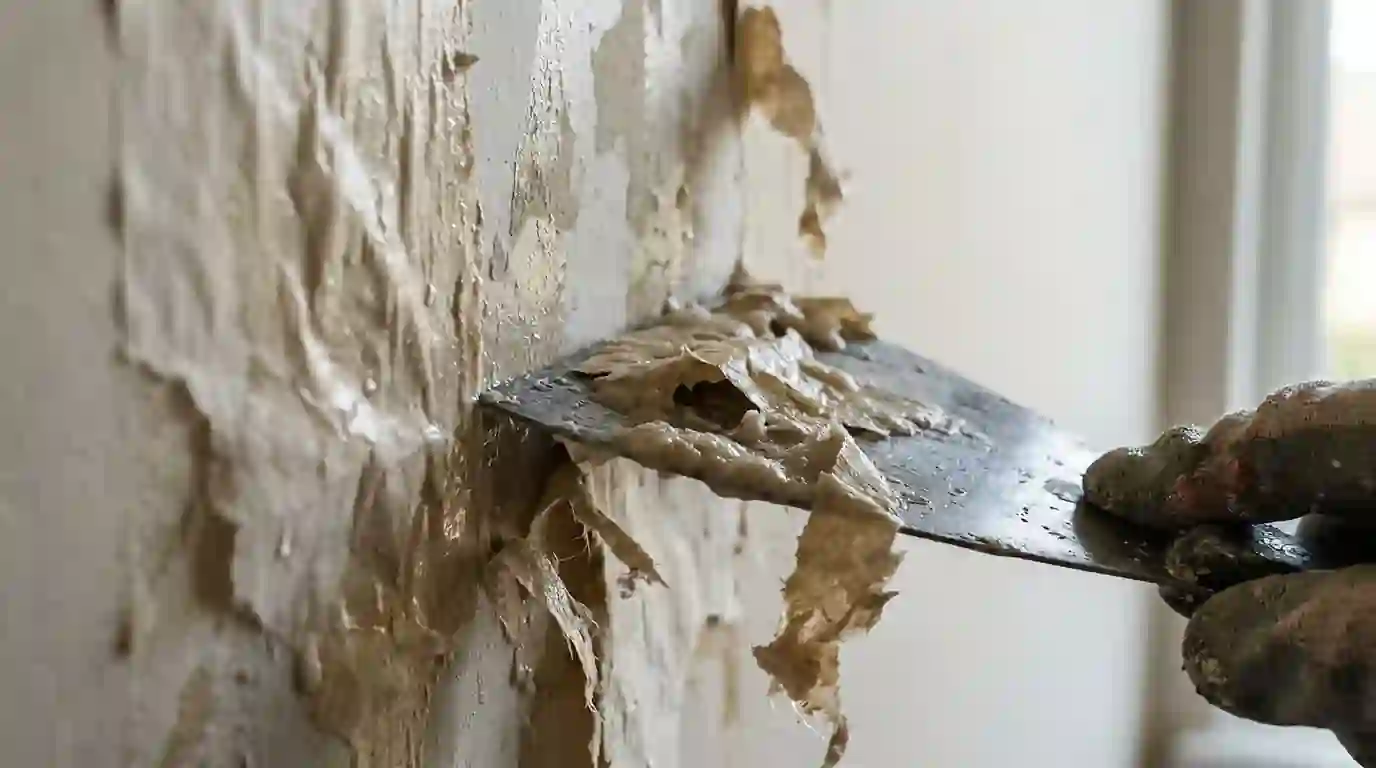
Mounting holes, anchors and dents are filled, texture is touched up, the wall is sanded and wiped clean, and nearby floors and furniture are fully covered.
- 3
Prime with tinted base
A gray or tinted primer matched to the finish color's depth goes on first, so the deep color reaches full, even coverage in fewer coats.
- 4
Lay out the design
For stripes, blocks or molding, we mark lines with a laser level, apply sharp-edge tape and seal its edge with the base color to prevent bleed.
- 5
Cut and roll the color
Corners are cut freehand, the field is rolled top to bottom with a consistent nap, and a second or third coat follows after the full recoat time.
- 6
Unmask and touch up
Tape is pulled at a low angle while still fresh, edges are touched up by hand, the room is reset and leftover paint is labeled for you.
Fort Worth conditions that shape accent wall painting
Light changes everything with accent colors in Fort Worth. The bright, high summer sun pours through west and south windows in the late afternoon, warming deep blues toward purple and making greens look more yellow, while the same wall looks nearly black after sunset. We sample on the actual wall and check it at different times before you commit. Foundation movement from the region's clay soil can open hairline cracks at corners, and a dark wall makes those cracks stand out as bright lines, so we tape and fill corner cracks before priming. In older homes in Fairmount and Arlington Heights, plaster walls make beautiful accent surfaces, but they need a bonding primer after any patching.
Estimate the paint for one room
Enter the room size to get a rough gallon count for walls. It assumes two finish coats and subtracts a typical door and two windows. Textured and porous surfaces drink more paint.
Where we offer accent wall painting around Fort Worth
Across Fort Worth (76102 and surrounding ZIP codes), including Fairmount, Ryan Place, Mistletoe Heights, Arlington Heights, Tanglewood, Westcliff and other neighborhoods, plus these nearby cities and counties:
- Arlington 76010
- Grand Prairie 75050
- North Richland Hills 76180
- Mansfield 76063
- Euless 76039
- Grapevine 76051
- Bedford 76021
- Keller 76248
- Burleson 76028
- Haltom City 76117
- Hurst 76053
- Southlake 76092
- Weatherford 76086
- Saginaw 76179
- Colleyville 76034
- Benbrook 76126
- Tarrant County 76102
- Denton County 76201
- Johnson County 76031
- Parker County 76086