Why grinding beats acid etching
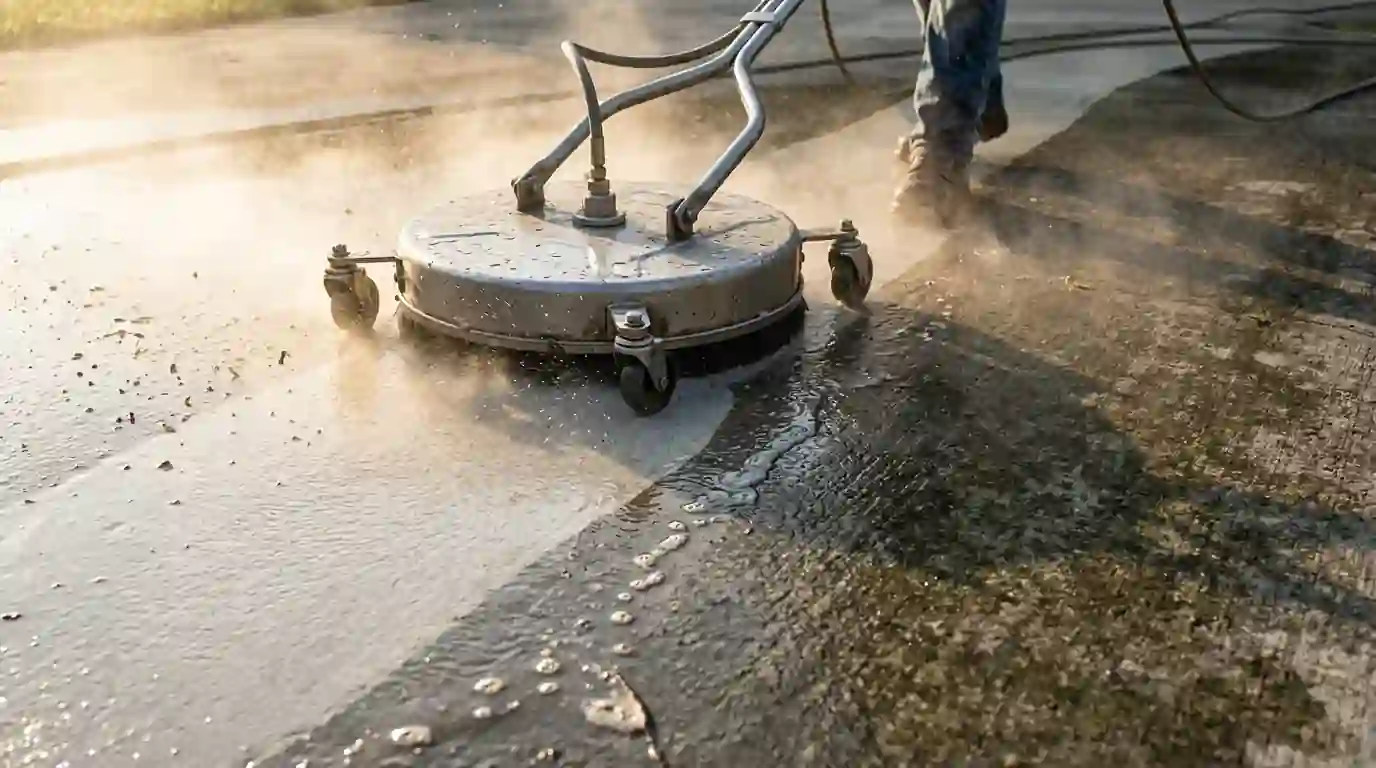
New concrete has a smooth, dense surface called laitance, and older slabs carry oil, tire marks and sealers. A coating applied over any of that will peel, usually starting under the tires. Acid etching, the method in most home kits, cleans unevenly and can leave residue. We grind the whole floor with a diamond grinder connected to a dust extractor, which opens the surface to a texture similar to medium sandpaper. Edges and corners are ground with a handheld grinder so the profile matches out to the walls. Oil stains that have soaked deep get degreased and, in stubborn spots, heated to pull oil out before grinding again.
Crack repair on a slab that moves
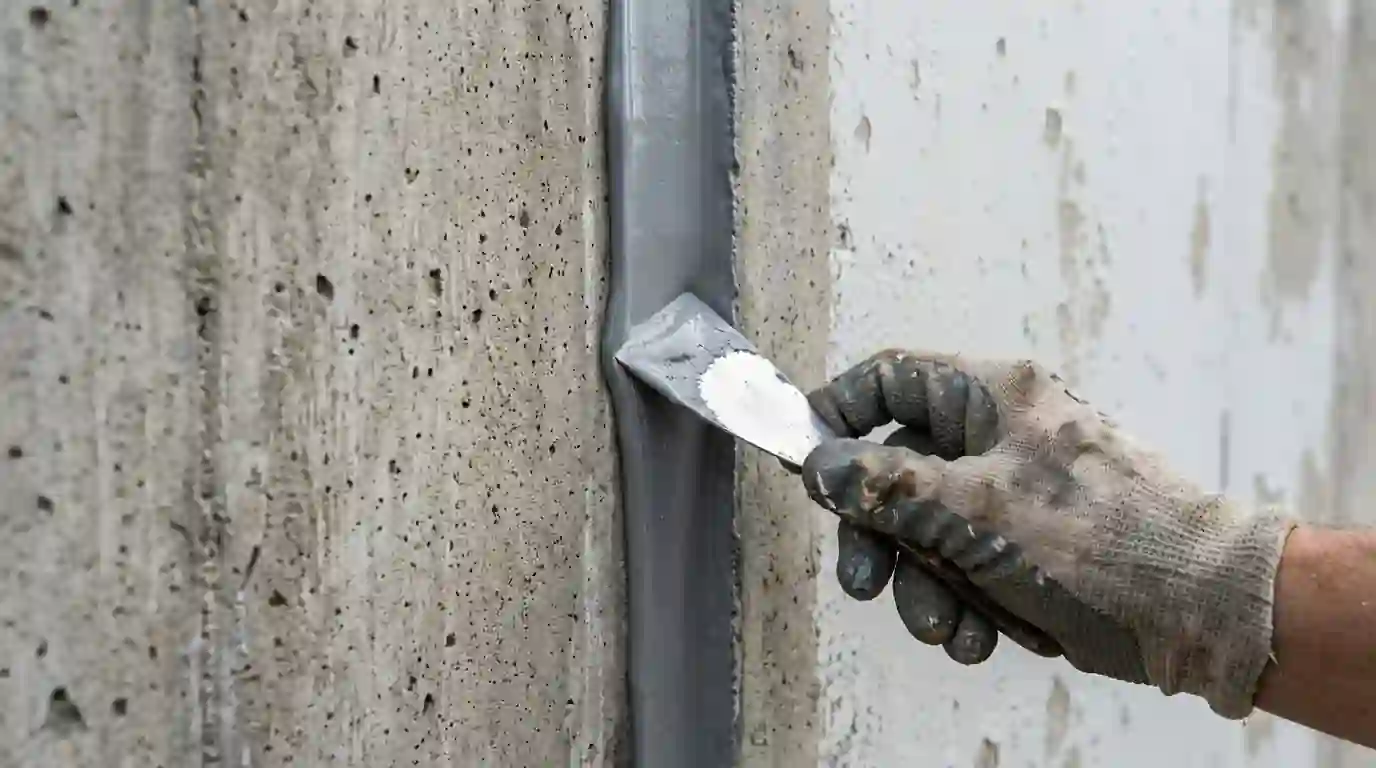
Almost every garage slab in North Texas has cracks. Control joints, the straight cuts in the slab, are intentional, and random cracks come from shrinkage and the clay soil underneath. We chase cracks open with a crack-chasing blade, vacuum them and fill with a semi-rigid polyurea or epoxy crack filler, then grind flush. Pitted and spalled areas near the garage door get a fast-setting epoxy mortar. We tell homeowners plainly: if the slab keeps moving, a crack can telegraph through the coating again, but a properly filled crack is far less noticeable than an untreated one. Control joints can be filled and coated over or left open and honored, depending on how much movement we see.
What garage floor epoxy typically costs in Fort Worth
$2,350 to $4,450
for a typical two-car garage floor of about 400 to 480 sq ft with full flake. Your price comes from a written scope after we see the job.
What moves the number
- Square footage and number of bays
- Old paint or coatings to grind off
- Crack, pit and spalled edge repair
- Moisture levels in the slab
- Full flake, partial flake or solid color
- Polyaspartic versus epoxy topcoat
What goes into the coating system?
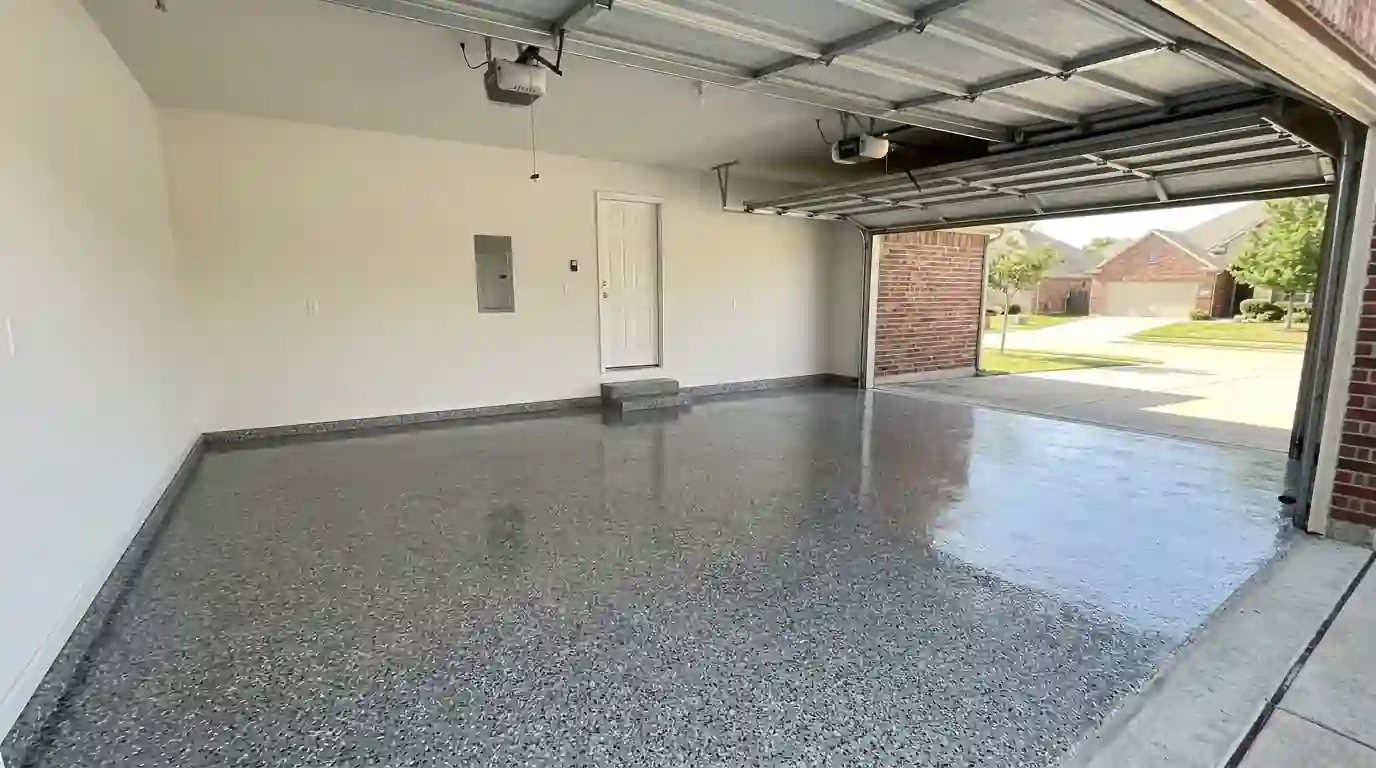
We build the floor in layers, each with a specific job. The first is a two-part 100% solids or high-solids epoxy base coat, rolled at a thickness that soaks into the ground concrete for bond. While it's wet, we broadcast decorative vinyl flake, either a full broadcast for a fully covered look or a partial scatter. After the base cures, loose flake is scraped and vacuumed, and a clear topcoat locks it in. For the topcoat, polyaspartic is our usual choice. It's UV stable, so it won't amber in sunlight from an open garage door, it resists hot tire pickup well, and it cures fast. Epoxy topcoats are less expensive but can yellow and soften more in heat.
- Diamond grinding with dust extraction
- Crack and spall repair with polyurea or epoxy mortar
- Two-part epoxy base coat
- Full or partial vinyl flake broadcast
- UV-stable polyaspartic clear topcoat
Moisture testing before anything is coated
Moisture rising through concrete is the hidden enemy of garage coatings. A slab without a vapor barrier, common in older homes, can push water vapor up and blister the coating from below. We tape a plastic sheet to the floor for a simple test before the job, and on suspect slabs we use a calcium chloride or meter reading. High readings call for a moisture-tolerant epoxy primer, which adds cost but keeps the system stuck to the slab.
Cure times and when your cars come back
With a polyaspartic topcoat, foot traffic is usually fine the next day, and vehicles can go back in after about three to five days, depending on temperature. Epoxy-only systems need about a week before driving on them. Hot tires from a long highway drive are softer than cool ones, so for the first month we suggest letting the car sit outside for a few minutes before pulling in. Clean spills promptly, and use a mild cleaner with a soft mop afterward.
Signs it is time for garage floor epoxy
- Dusty concrete that tracks gray powder into the house
- Oil and transmission fluid stains you can't scrub out
- A peeling DIY kit coating lifting under the tire paths
- Pitting and spalled edges near the garage door from age and freeze cycles
- Cracks spreading across the slab you'd like sealed and hidden
- A garage used as a gym, shop or extra living space
How we handle garage floor epoxy, step by step
- 1
Inspect and test
We check slab condition, cracks, old coatings and drainage, and run a moisture test so the right primer and coating system are chosen before work starts.
- 2
Clear and grind
The garage is emptied, walls are protected at the base, and the slab is diamond ground with dust extraction to open the concrete for bonding.
- 3
Repair the slab
Cracks are chased and filled with polyurea or epoxy, pits and spalls are patched with epoxy mortar, and repairs are ground flush with the floor.
- 4
Base coat and flake
The two-part epoxy base coat is rolled out at the specified thickness and vinyl flake is broadcast while it's wet, in the coverage you chose.
- 5
Scrape and topcoat
After curing, loose flake is scraped off and vacuumed, then a clear polyaspartic or urethane topcoat is rolled out evenly to lock in the texture.
- 6
Cure and return
We go over foot and vehicle return times, check the floor with you and leave care guidance for cleaning and handling hot tires through the first month.
Fort Worth conditions that shape garage floor epoxy
Fort Worth garages are some of the toughest spaces for floor coatings. In July and August, an attached garage with the door closed can top 110F, and car tires coming off I-35W or Loop 820 in afternoon heat are hot enough to soften cheap coatings and lift them right off. That's why we use a high-solids base and a polyaspartic topcoat rated for hot tire resistance. The region's expansive clay soil makes garage slabs crack and shift, so crack repair is part of nearly every job. Heat also shortens working time, so in summer we coat early in the morning and batch smaller mixes of each product to avoid premature setting in the bucket.
Where we offer garage floor epoxy around Fort Worth
Across Fort Worth (76102 and surrounding ZIP codes), including Fairmount, Ryan Place, Mistletoe Heights, Arlington Heights, Tanglewood, Westcliff and other neighborhoods, plus these nearby cities and counties:
- Arlington 76010
- Grand Prairie 75050
- North Richland Hills 76180
- Mansfield 76063
- Euless 76039
- Grapevine 76051
- Bedford 76021
- Keller 76248
- Burleson 76028
- Haltom City 76117
- Hurst 76053
- Southlake 76092
- Weatherford 76086
- Saginaw 76179
- Colleyville 76034
- Benbrook 76126
- Tarrant County 76102
- Denton County 76201
- Johnson County 76031
- Parker County 76086