Typical paint lifespan by surface on Fort Worth homes
Paint life depends on what's under it as much as what's in the can. Dense, stable surfaces hold a film longer than wood that swells and shrinks with every rain and heat wave. The ranges below assume a premium 100% acrylic, proper primer, two coats and normal Fort Worth exposure. Your home's numbers will vary with sun, sprinklers, shade trees and how well the last job was prepped. Treat them as what a well-done job typically delivers here, not a promise, and expect the low end on walls that bake in afternoon sun or sit behind a sprinkler head.
- Fiber cement siding: 8 to 12 years
- Smooth wood or composite siding: 7 to 10 years
- Rough cedar or older pine siding: 5 to 8 years
- Fascia, soffits and window trim: 5 to 8 years
- Painted brick with masonry paint: 10 to 15 years
- Stucco with acrylic or elastomeric coating: 10 to 15 years
- Front doors in full sun: 3 to 5 years; shaded doors: 6 to 10
Why south and west walls fail first in North Texas
Walk around almost any Fort Worth house that's six or seven years past its last paint job and you'll see a split personality. The north side still looks close to new while the west and south walls have gone chalky and pale. Ultraviolet light breaks down the paint binder, releasing pigment particles that rub off as white powder, and afternoon heat on those elevations can push siding surface temperatures well past 130F in July and August. That heat makes wood expand and contract more, stressing the paint film and opening caulk joints. Darker colors absorb more heat, so a deep charcoal body color on a west wall ages faster than a light tan on the same wall. Many homeowners repaint only the sun-facing sides on a shorter cycle and the whole house every other time, which can be a smart budget move.
Early warning signs your exterior paint is failing
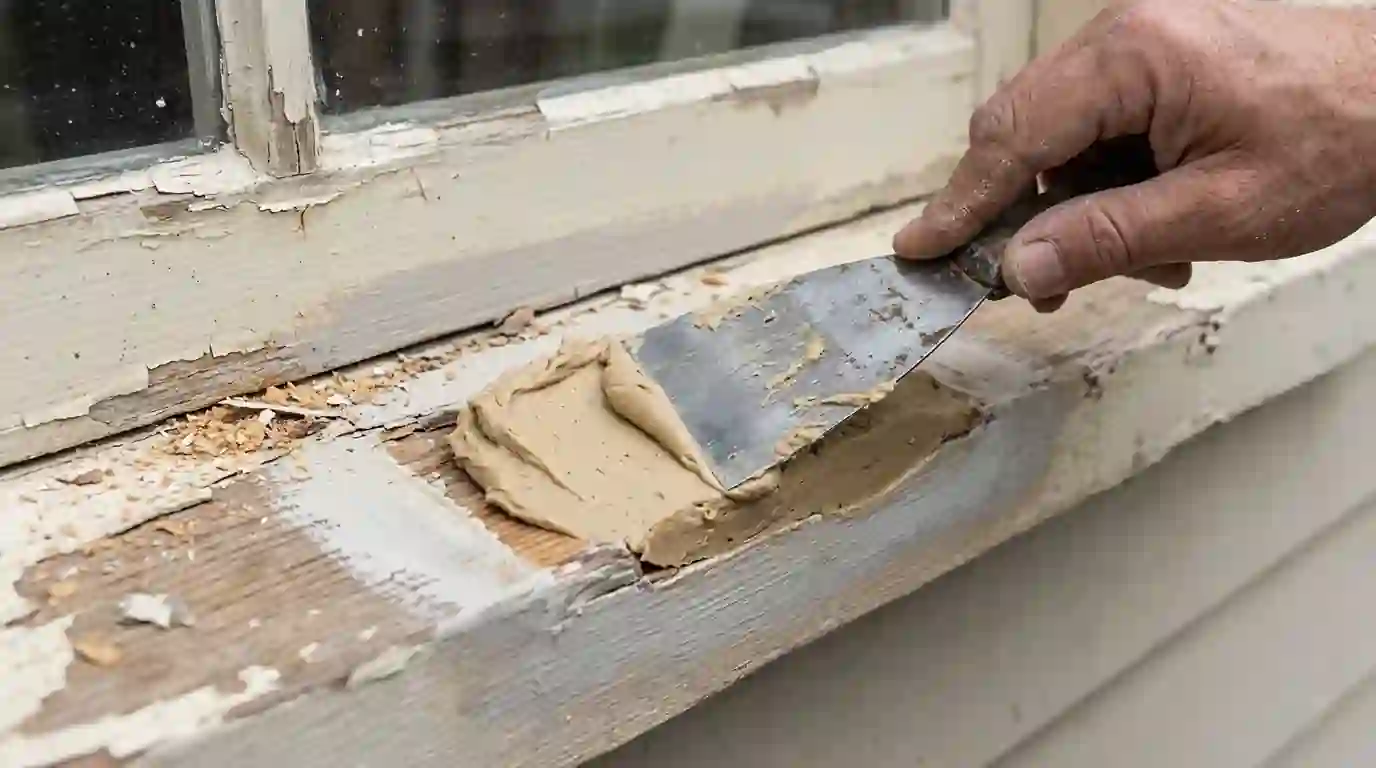
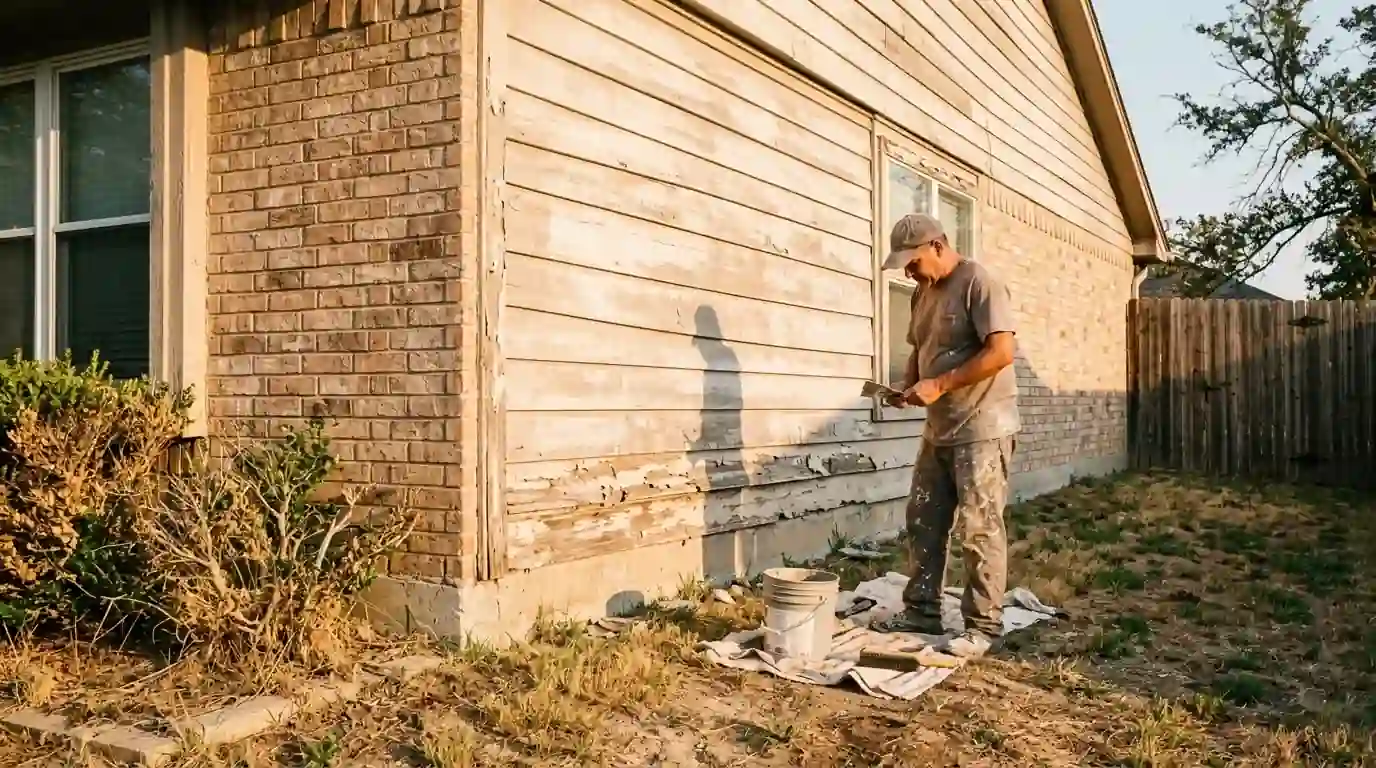
Paint rarely fails all at once. It gives you signals, and catching them early can mean a touch-up instead of full stripping. Run a hand across the siding: if it comes away with heavy white or colored powder, the film is chalking and losing protection. Look for hairline cracks at board ends and around window corners, which let water in behind the paint. Check the bottom edges of lap siding and the lower foot of trim near sprinklers, since that's where peeling and swelling start. Soft spots in fascia, window sills or door jambs mean wood rot has begun beneath the paint. Gaps where caulk has pulled away from brick or trim are common here because clay soils move foundations seasonally.
- Heavy chalk on your hand after rubbing a wall
- Hairline cracking or alligatoring on trim
- Peeling at the bottom edges of siding
- Open caulk joints at corners, windows and brick lines
- Soft or swollen wood at sills and fascia
How prep and application decide the lifespan from day one
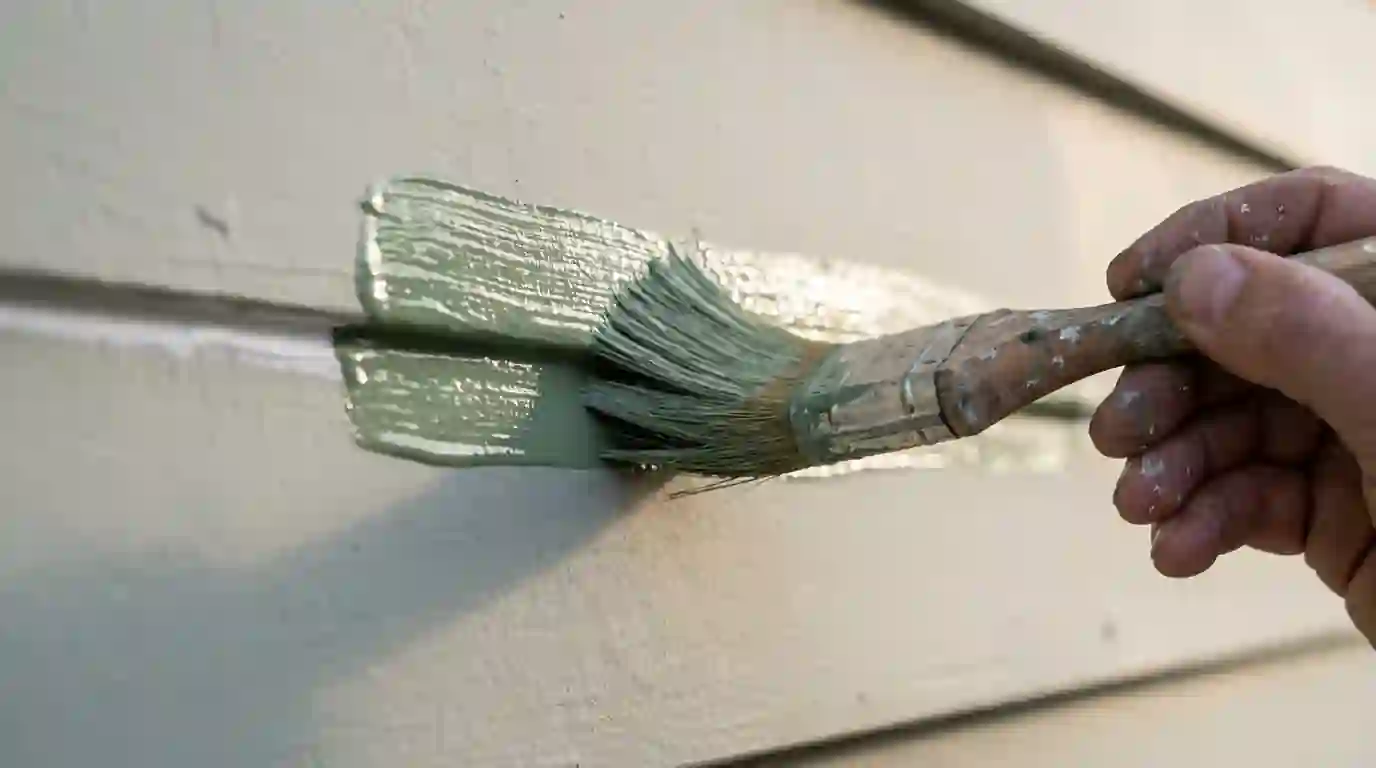
When we see exterior paint fail early, usually within three or four years, the cause is almost always preparation or application rather than the paint itself. Painting over chalk without washing is the most common mistake; the new coat bonds to loose powder and peels. Skipping primer on bare wood or tannin-rich cedar leads to stains and weak adhesion. Applying a single thin coat leaves a dry film too thin to block UV. Painting in direct sun on a hot wall causes the paint to skin before it bonds. Caulk is another factor. We use a flexible acrylic urethane or siliconized acrylic sealant at joints, tooled smooth and allowed to set before painting. The difference between a 4-year and a 9-year paint job is often a day of extra prep.
Simple maintenance that adds years to your paint
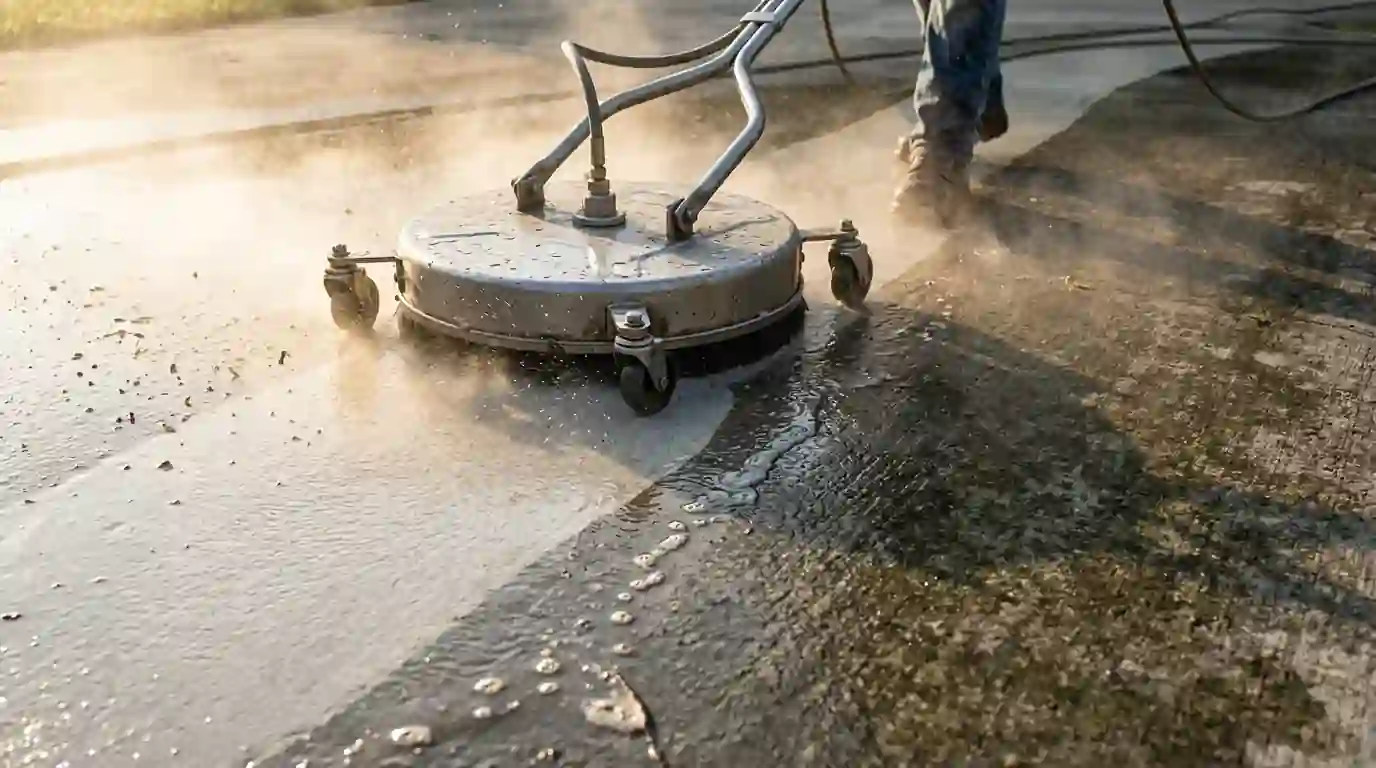
A little upkeep goes a long way in Fort Worth's climate. Once a year, ideally in spring after pollen season, rinse the siding and trim with a garden hose and a soft brush or a low-pressure wash with a mild cleaner. That removes dirt and mildew that hold moisture and break down paint. Adjust sprinkler heads so they don't spray the house every morning, since daily water on the lower siding is one of the fastest ways to cause peeling and rot. Trim tree branches that rub against siding or drop sap. Every year or two, walk the house and recaulk any joints that have opened, particularly around windows and where trim meets brick. Touch up small chips on doors and trim before water gets behind them. These steps cost little and often add two to four years.
How hail, freezes and sprinklers shorten paint life
Fort Worth weather adds a few local hazards. Spring hail can chip paint on fascia, gutters, garage doors and the windward side of siding, exposing bare wood or metal that then rusts or rots. After a big storm, it's worth walking the house to look for chips and dents. Hard freezes, though rare, can expand moisture trapped in cracks and pop paint off weathered wood. The February 2021 storm left more peeling on many homes in its wake. Lawn sprinklers are the everyday culprit. Water hitting the same 18 inches of siding every morning keeps that wood damp, softening the paint and inviting mildew and rot. Redirecting heads or switching to drip lines along the foundation protects the bottom of the wall more than any paint upgrade can.
Repaint, touch up or spot repair: making the call
Not every sign of wear means a full repaint. If chalking is light and limited to one or two elevations, a wash and fresh coat on just those sides may be enough. If trim is peeling but siding looks fine, a trim-only repaint stretches the budget. When you see widespread cracking, peeling across several walls or rot in multiple places, a full exterior with thorough prep is usually cheaper long term than repeated patches. Waiting too long tends to raise costs, because once paint fails, wood starts to absorb water, and repairs to fascia, sills and siding can rival the painting price itself. If you're unsure where your house stands, call us and describe what you're seeing; we'll take a look and tell you honestly whether it needs paint now or can wait a season.