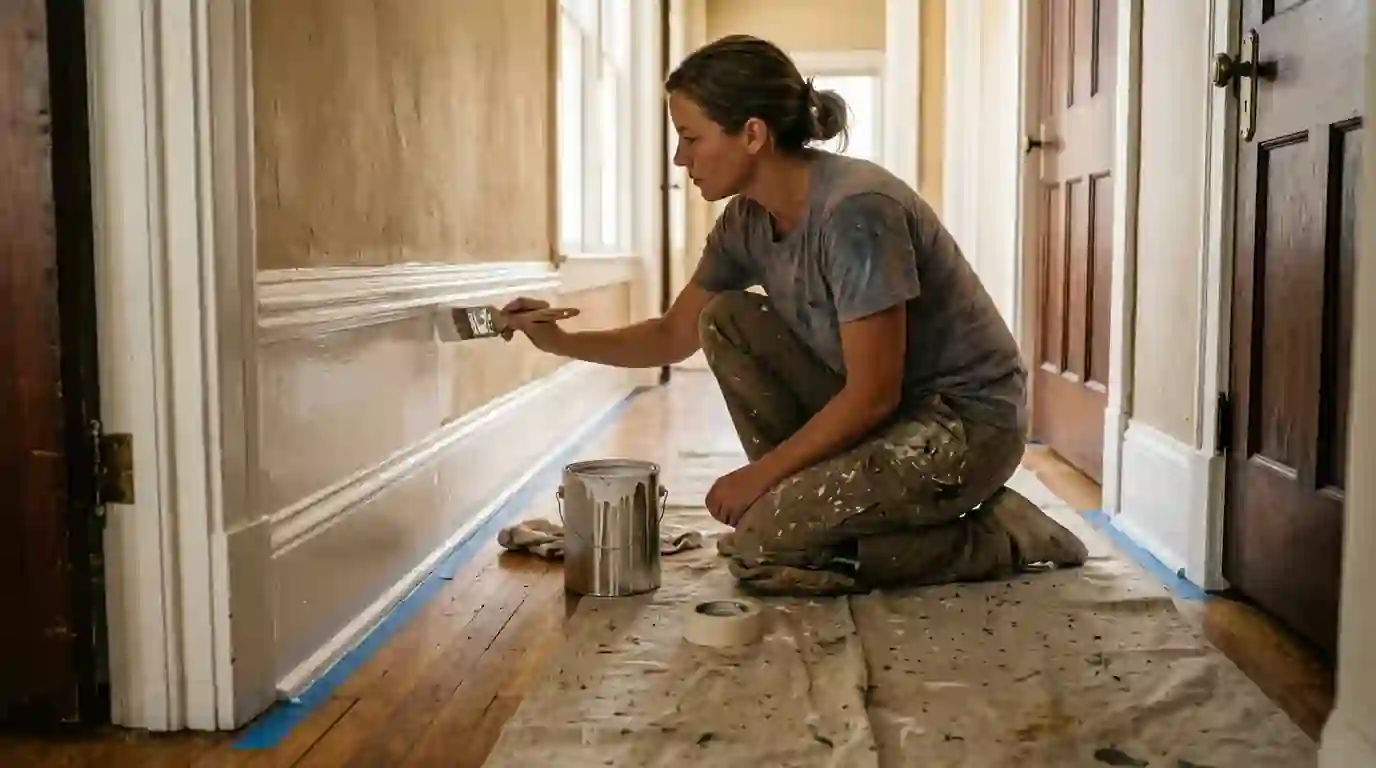
Why caulk joints are the first thing we fix
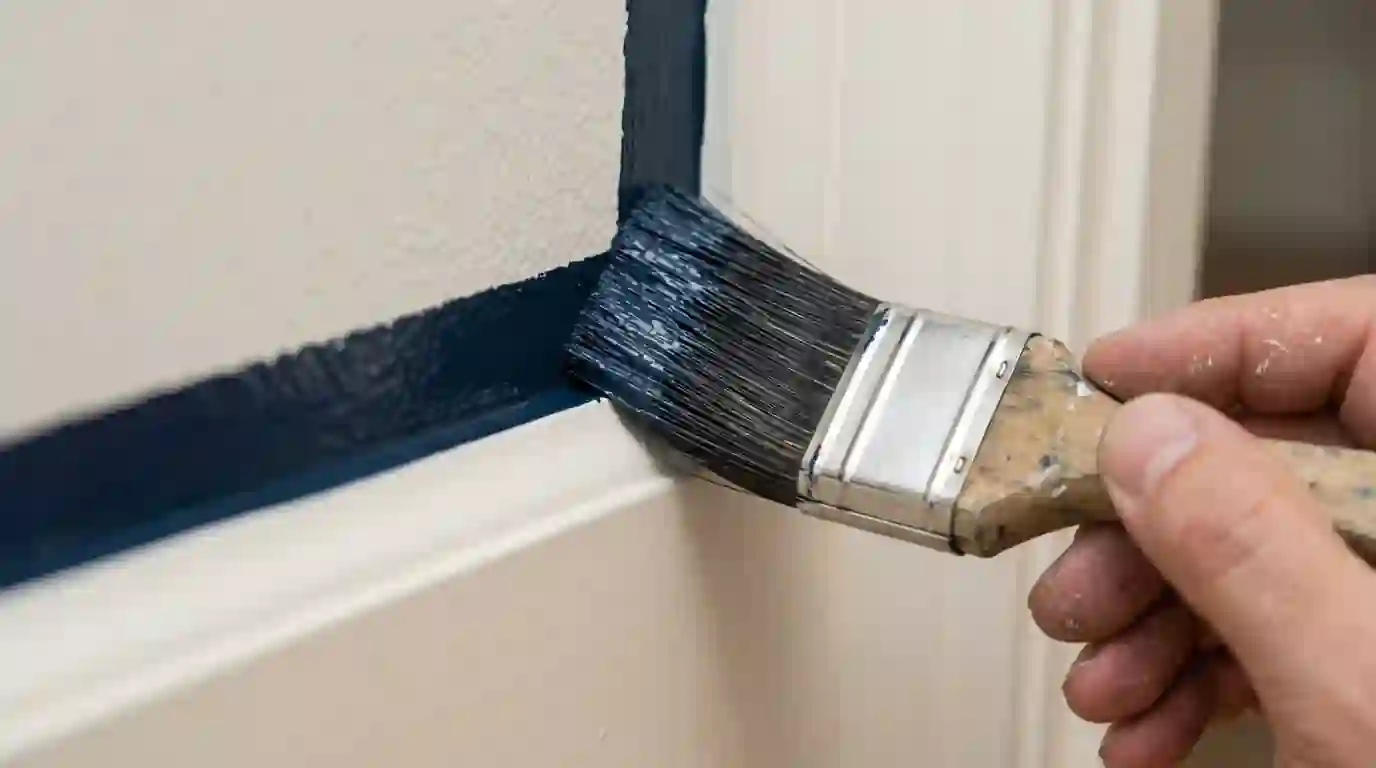
The line where a baseboard meets the wall, and where casings meet the drywall around doors, is where trim shows its age. Those joints flex as the house moves, and old caulk dries out, cracks and pulls away. We cut out loose caulk, clean the joint and run a fresh bead of a high-performance siliconized acrylic or elastomeric painter's caulk, tooled smooth with a damp finger or tool. Joints wider than about a quarter inch get a foam backer rod first so the caulk can stretch instead of tearing. Mitered corners on crown and casings that have opened up are filled with a sandable wood filler rather than caulk, because caulk shrinks in a deep miter and leaves a visible dip once painted.
Is your trim oil or latex, and why does it matter?
Many Fort Worth homes built before the mid-2000s have trim painted with oil-based enamel. Latex paint rolled straight over oil will peel off in strips with a fingernail, sometimes weeks later. We test with a cotton swab and rubbing alcohol: if the paint softens and transfers, it's latex, and if it doesn't, it's oil. Oil trim gets a thorough scuff sand with 150 to 220 grit and a coat of bonding primer before any waterborne enamel goes on. For the finish we prefer waterborne alkyd enamels. They flow out nearly like traditional oil, dry hard, and don't yellow over time the way oil does in rooms with little sunlight.
What baseboard & interior trim painting typically costs in Fort Worth
$1,650 to $3,780
for baseboards, door casings and window trim in a typical 1,800 sq ft home. Your price comes from a written scope after we see the job.
What moves the number
- Total linear feet of baseboard and casing
- Crown molding, chair rail or wainscot
- Oil-based trim needing a bonding primer
- Stained trim converting to painted
- Volume of split caulk and gaps
- Carpet versus hard floors at the base
Getting a clean line at carpet and hard floors
On hard floors we tape the floor edge with a delicate-surface tape and brush the baseboard down to it. On carpet, we tuck a wide painter's tape under the baseboard edge and press the carpet down with a broad knife, which keeps fibers out of wet paint. Stair skirts and quarter round get the same treatment. Brushing, rather than spraying, is how we finish trim in an occupied home, because it lays enamel into the profile and avoids overspray on walls, floors and furniture. We use a good angled sash brush in the 2 to 2.5 inch range and work in short sections so each length of baseboard stays wet until it's finished end to end.
- Delicate tape along hardwood, tile and vinyl plank
- Tucked tape and broad knife along carpet edges
- Brush-applied enamel in occupied homes
- Quarter round and shoe molding included
Converting stained wood trim to paint
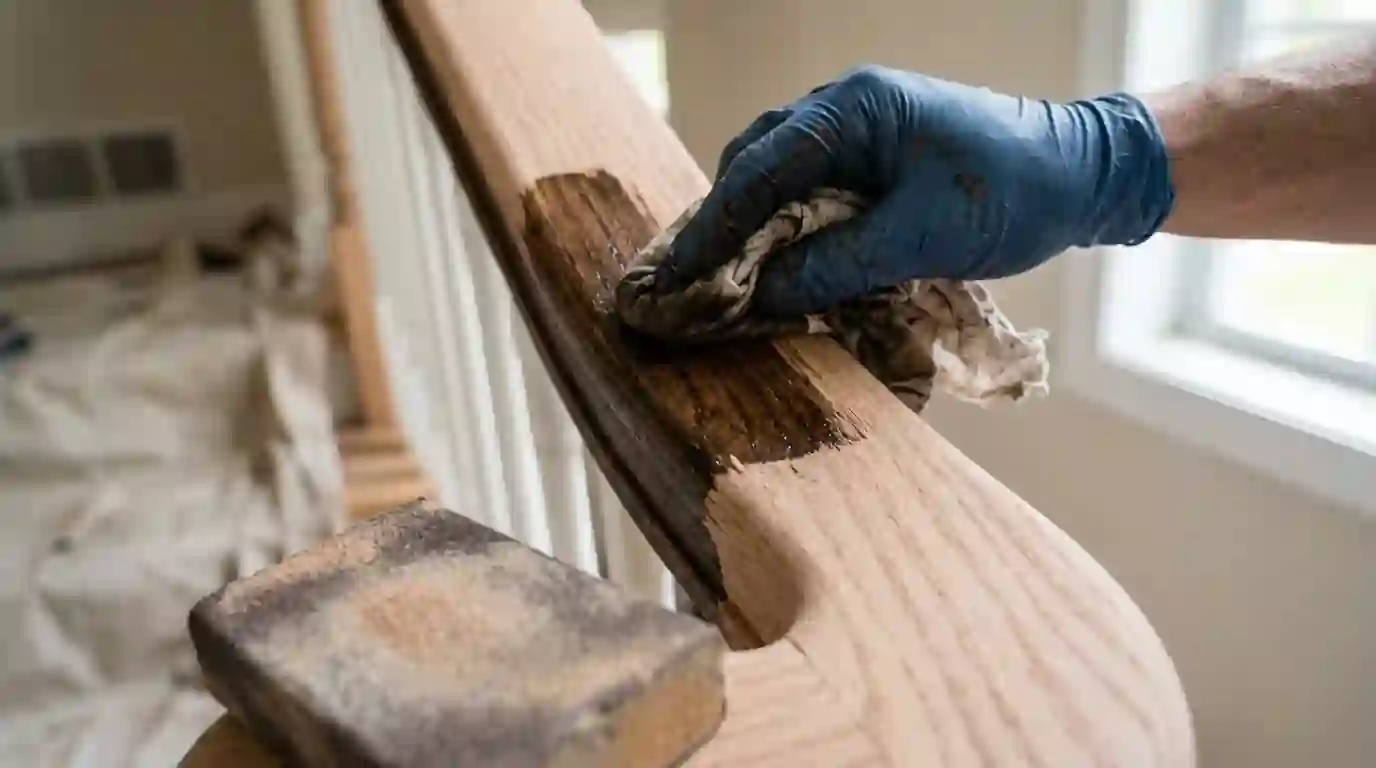
Stained oak or pine trim was standard in many 1970s through 1990s Fort Worth houses. Painting it is a popular update, but it needs more prep than repainting. The varnish gets deglossed and scuff sanded, nail holes are filled, and we apply a shellac-based primer to stop wood tannins and knots from bleeding through as yellow or brown spots in white paint. Expect three coats in total over that primer for even color across the grain.
How long before baseboards can take a vacuum bump?
Trim enamel is dry to the touch within a few hours, but the surface stays softer than you'd think for the first week or two. We suggest keeping furniture an inch away from new baseboards, avoiding robot vacuums along fresh trim for several days, and waiting about two weeks before scrubbing. Once cured, a semi-gloss enamel can be wiped down with a damp cloth again and again without dulling or losing its sheen.
Signs it is time for baseboard & interior trim painting
- Dark scuffs and vacuum marks along baseboards that won't wash off
- Gaps opening between baseboard tops and the wall after a dry summer
- Yellowed white trim from aging oil-based paint in darker rooms
- Peeling trim paint where latex was put over oil
- Open miters at door casing corners and crown molding joints
- Stained oak trim clashing with newly painted walls
How we handle baseboard & interior trim painting, step by step
- 1
Test and plan
We test the existing trim finish for oil or latex, check caulk joints and miters, and agree on sheen and color so the right primer is ready before prep begins.
- 2
Clean and protect
Trim is washed to remove grease and dust, floors are taped at the base, carpets are tucked and nearby furniture is moved away from the walls.
- 3
Fill and sand
Nail holes, dents and open miters are filled, then everything is sanded with 150 to 220 grit so the new enamel bonds and the surface feels smooth.
- 4
Recaulk joints
Old split caulk is cut out and replaced with a flexible paintable caulk, using backer rod in wide gaps, so the trim reads tight to the wall.
- 5
Prime where needed
Oil-based trim, stained wood and bare filler get a bonding or shellac-based primer, which is sanded lightly once dry for a smooth surface under the enamel.
- 6
Brush two enamel coats
Two coats of waterborne enamel are brushed on with long, even strokes, tape is pulled while the edge is fresh and the room is reset and inspected.
Fort Worth conditions that shape baseboard & interior trim painting
In Fort Worth the gap at the top of a baseboard is often the first visible sign that the house has moved. Expansive clay soil shrinks under the slab in late summer and swells again with spring and fall rain, and the drywall and trim shift slightly against each other each time. That's why we use a flexible, elastomeric caulk instead of a cheap acrylic tube that cracks in one season. Window stools and aprons on west and south walls bake in afternoon sun through the glass, so we use enamels with good heat resistance there and avoid very dark trim colors that soften and stick. In older Arlington Heights and Fairmount homes, wide original trim may hide lead paint layers, so we follow lead-safe sanding practices.
Where we offer baseboard & interior trim painting around Fort Worth
Across Fort Worth (76102 and surrounding ZIP codes), including Fairmount, Ryan Place, Mistletoe Heights, Arlington Heights, Tanglewood, Westcliff and other neighborhoods, plus these nearby cities and counties:
- Arlington 76010
- Grand Prairie 75050
- North Richland Hills 76180
- Mansfield 76063
- Euless 76039
- Grapevine 76051
- Bedford 76021
- Keller 76248
- Burleson 76028
- Haltom City 76117
- Hurst 76053
- Southlake 76092
- Weatherford 76086
- Saginaw 76179
- Colleyville 76034
- Benbrook 76126
- Tarrant County 76102
- Denton County 76201
- Johnson County 76031
- Parker County 76086