Why the repairs decide how long your walls look good
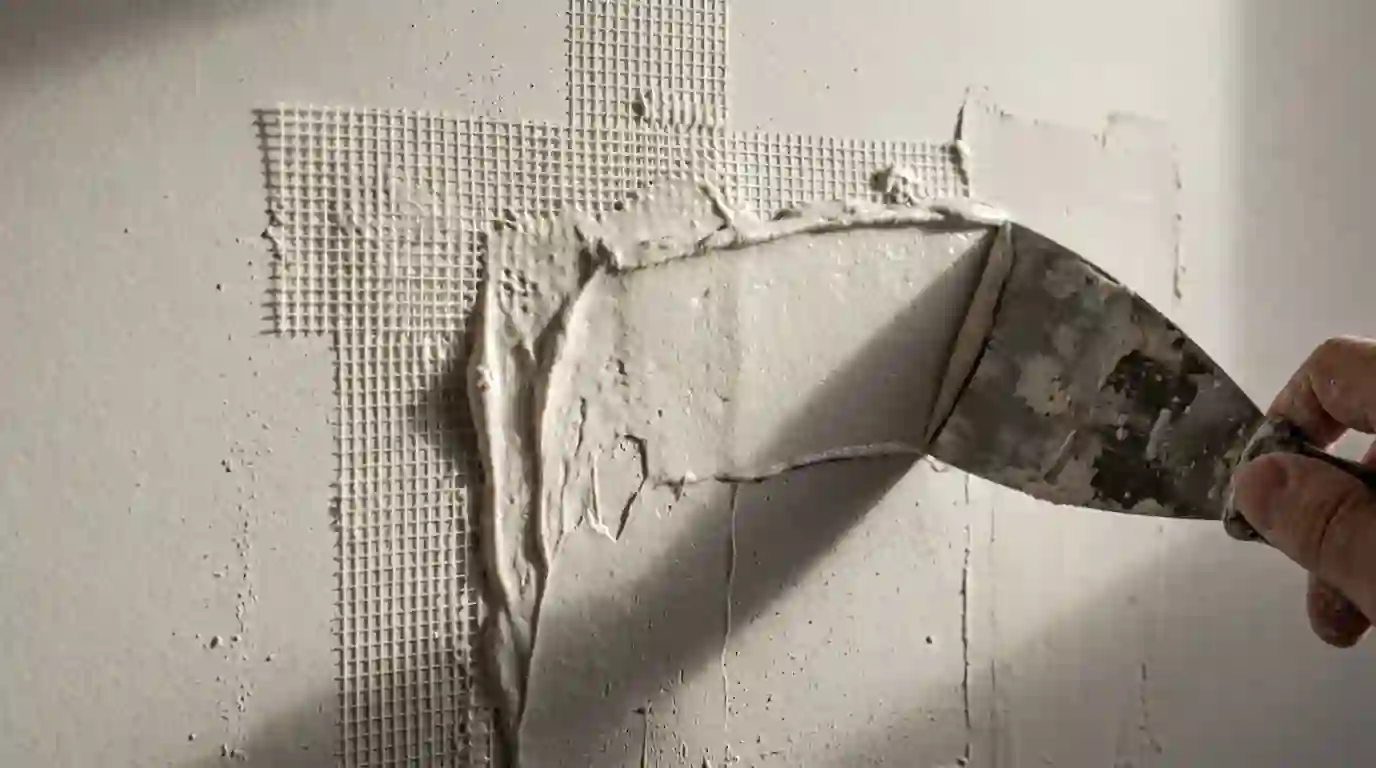
Most of the time on a good interior job goes into the wall before any color goes on. In a typical Fort Worth house we find hairline cracks running off the corners of doors and windows, nail pops along stud lines, dents behind doors and old anchors where pictures and TVs hung. We open settling cracks slightly with a utility knife, embed paper or mesh tape where the crack has moved before, and finish with a lightweight setting compound rather than premixed spackle alone. Each patch is feathered wide, sanded with 150 to 180 grit and vacuumed so dust doesn't end up in the paint.
Spot priming matters more than most people expect. Joint compound absorbs paint differently than painted drywall, and under raking light a repaired area shows as a dull halo even after two coats. A quick coat of drywall primer over every repair evens that absorption out. Where we find old water marks, crayon, marker or smoke residue, we switch to a shellac or oil-based stain blocker, because latex primers let those stains bleed back through within a day or two.
Which sheen belongs on which wall?
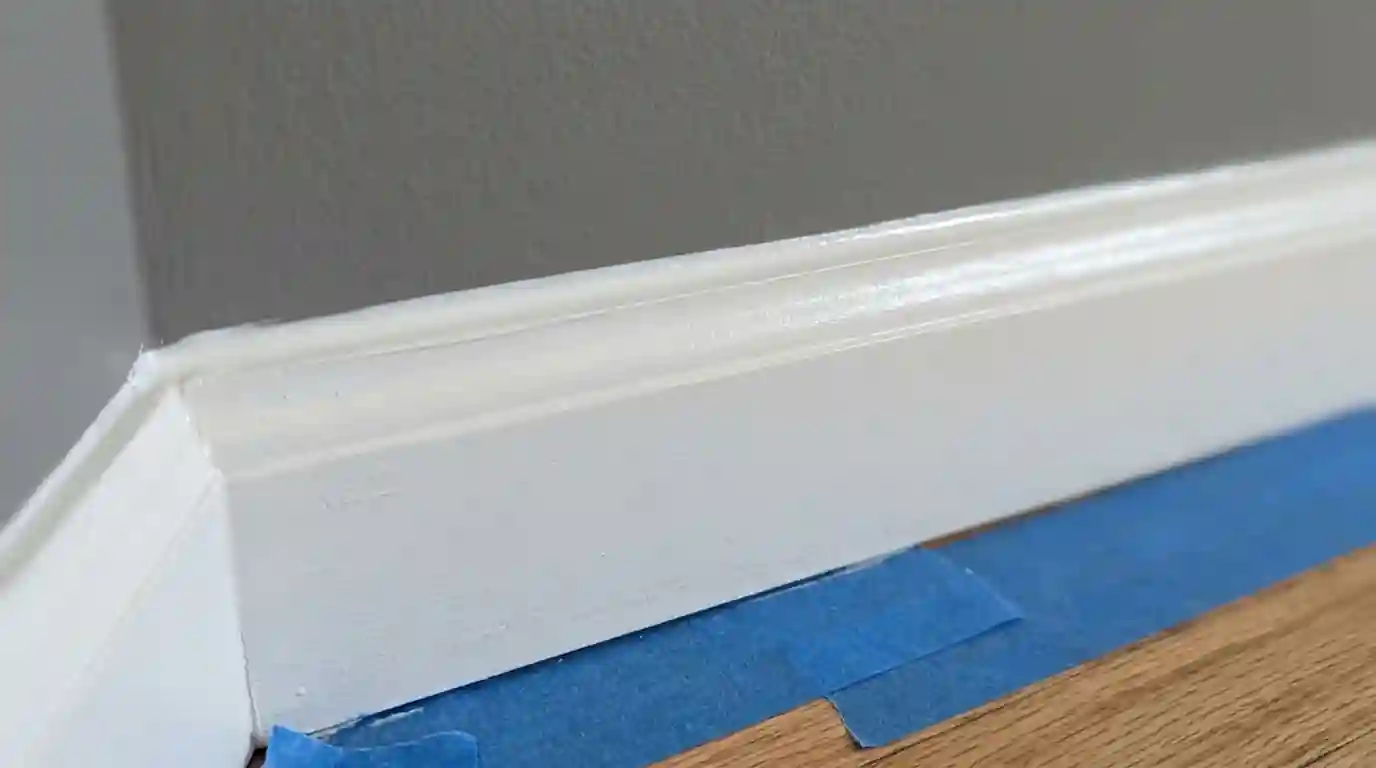
Sheen is a practical decision as much as a looks decision. Flat and matte finishes hide drywall imperfections best and suit formal living rooms and bedrooms. Eggshell is the most common wall finish we apply in Fort Worth homes because it wipes clean without highlighting every trowel mark in the texture. Satin holds up in hallways, kids' rooms and mudrooms. Kitchens and bathrooms get satin or a dedicated bath paint with mildewcide, since steam and splatter break down flatter finishes. Trim and doors usually go semi-gloss so they read crisp against the walls.
- Flat or matte: low-traffic rooms and walls with patched texture
- Eggshell: living areas, bedrooms and most open-plan walls
- Satin: hallways, kids' rooms, laundry and mudrooms
- Semi-gloss: trim, doors and bathroom wainscot
What interior house painting typically costs in Fort Worth
$3,150 to $6,850
for walls only in a typical occupied 1,800 sq ft home with 8 to 9 ft ceilings. Your price comes from a written scope after we see the job.
What moves the number
- Ceiling height and two-story foyers
- Number of drywall cracks and patches
- Dark-to-light color changes needing primer
- Rooms painted in different colors
- Furniture volume and how full rooms are
- Adding ceilings, trim or doors to the scope
How your furniture and floors stay clean
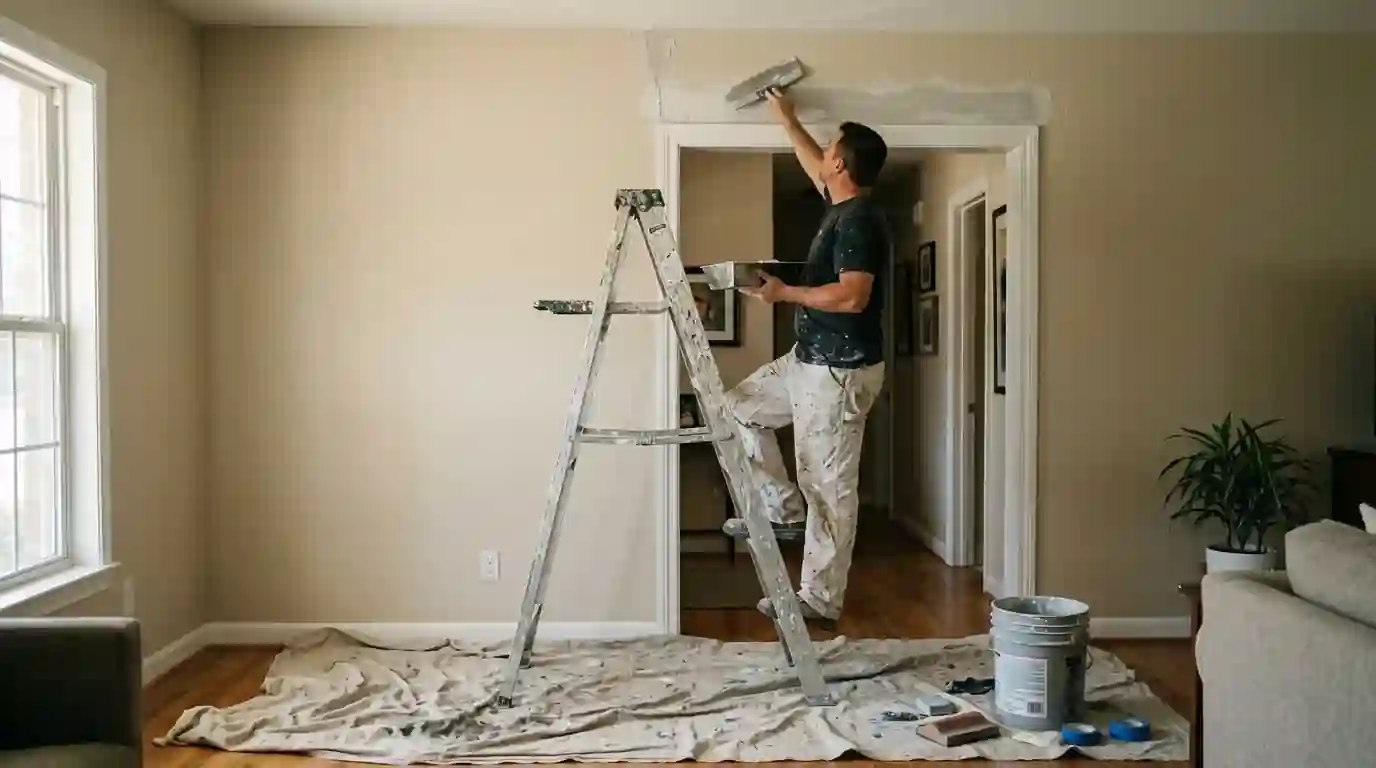
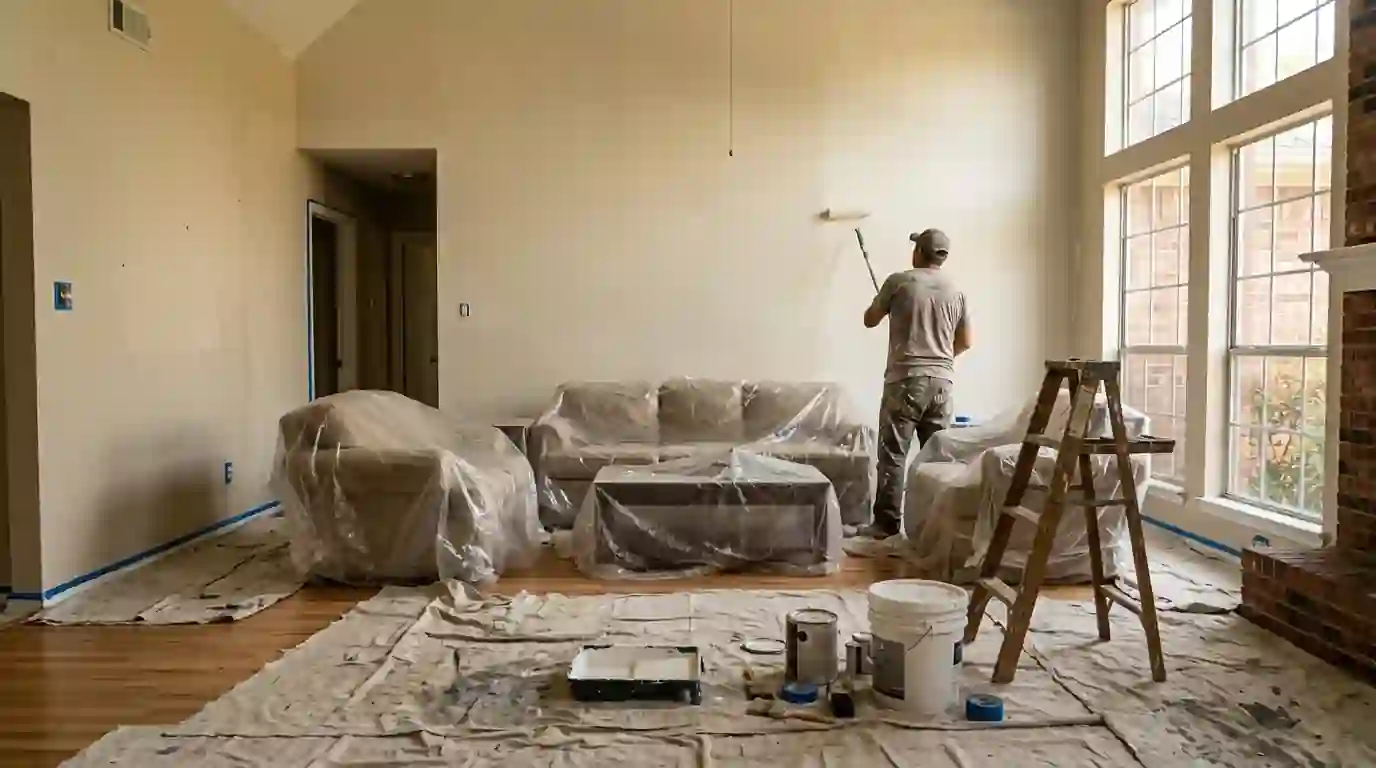
We paint occupied homes nearly every week, so protection is routine rather than an afterthought. Furniture moves to the middle of each room and goes under plastic sheeting, and anything too heavy to move gets wrapped in place. Floors get canvas drop cloths with a rubber backing, and hardwood or luxury vinyl paths get rosin paper taped at the edges. Outlet covers and switch plates come off and go in a labeled bag per room. Wall hangings are set aside with their hardware taped to the back, so nothing goes missing before we rehang them.
At the end of each day we roll up drop cloths, vacuum sanding dust, wrap brushes and rollers, and leave bedrooms and the kitchen usable. If you're living in the home through the job, we sequence rooms so you always have somewhere to sleep and cook. Pets get a closed room or a crate during the hours we're working nearby, and we keep exterior doors shut so they can't slip out. Thermostats stay where you set them, since steady indoor temperature helps the paint dry evenly.
What dry time and cure time mean for living in the house
Modern low-VOC acrylic wall paints are dry to the touch in about an hour and ready for a second coat in two to four hours at normal indoor temperature and humidity. That doesn't mean they're hard. Most interior latex paints need around two weeks, and sometimes a full month, to cure completely. During that window, hang pictures gently, keep furniture an inch or two off the wall, and wait a couple of weeks before scrubbing anything. We use zero or low-VOC products, so the smell usually clears within a day with the HVAC fan running.
Can a dramatic color change be done without endless coats?
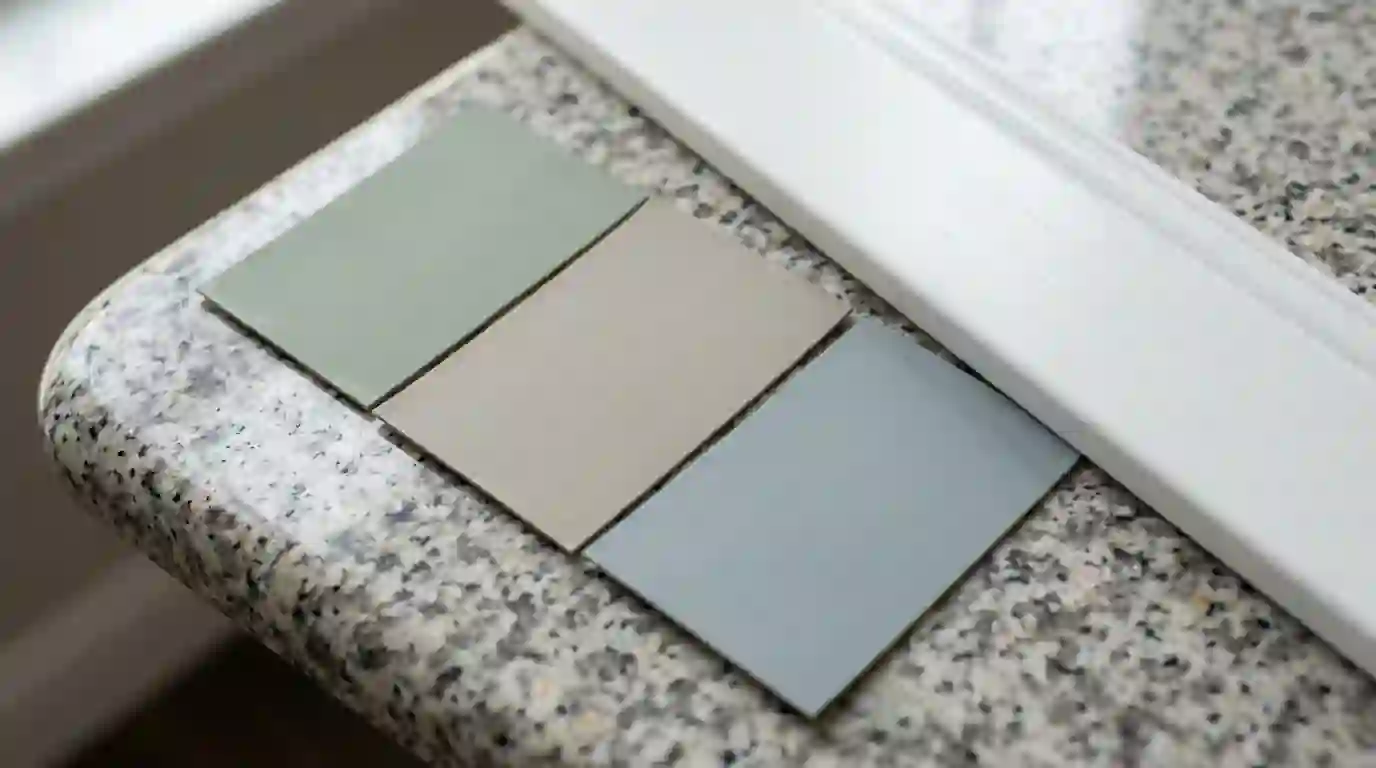
Going from a dark navy or deep red back to a light neutral, or covering a 2000s-era tan with a bright white, is where interior jobs go sideways. We prime first with a tinted primer, usually a gray shade matched to the new color's depth, because it hides the old color in fewer total coats. Deep reds and yellows often need a third coat even over primer, since those pigments are less opaque. We tell you before starting which walls will need that, so the price reflects it from the beginning.
Signs it is time for interior house painting
- Hairline cracks spreading from door and window corners after a dry summer
- Scuffs and handprints that come back the day after you wipe them
- Paint that rubs off on a damp cloth, a sign of a cheap flat finish
- Patched holes from old TV mounts showing as dull spots on the wall
- Yellowed walls from cooking, candles or old oil-based paint
- A wall color that dates the house before listing or after moving in
How we handle interior house painting, step by step
- 1
Walkthrough and color plan
We walk each room with you, note cracks, stains and sheen needs, confirm colors room by room, and write the scope so you know exactly which walls, ceilings and trim are included.
- 2
Move and cover
Furniture goes to the middle of each room under plastic, floors get rubber-backed drop cloths or rosin paper, and plates, vents and wall hangings come off into labeled bags.
- 3
Repair and sand
Cracks are taped and filled with setting compound, holes and dents are patched, and everything is sanded smooth with 150 to 180 grit before we vacuum walls and baseboards.
- 4
Prime and caulk
Repairs and stains are spot primed with the right product, and open gaps where trim meets wall are filled with a paintable acrylic caulk so finished lines read straight.
- 5
Cut and roll two coats
We cut in by hand at ceilings and trim, then roll each wall in sections while the brushed edge is still wet, so the border and the rolled field blend without lap marks.
- 6
Final walk and reset
Under good light we walk the rooms with you, touch up anything you point out, reinstall plates and vents, move furniture back and leave labeled touch-up paint for each color.
Fort Worth conditions that shape interior house painting
Fort Worth's expansive clay soil is the main reason interior paint jobs here need more repair work than in many other places. During long, dry summers the clay shrinks and the slab settles slightly, then it swells back with spring rain. Each cycle opens cracks over doorways, splits caulk at the corners of crown molding and leaves diagonal cracks running across hallways. We tape and fill those properly, but if a crack has reopened year after year, it's worth having the foundation looked at before investing in fresh paint. Bright west light through large windows in newer homes also shows roller marks and patch flashing that dimmer rooms hide, so we check walls under that light before calling a room finished.
Estimate the paint for one room
Enter the room size to get a rough gallon count for walls. It assumes two finish coats and subtracts a typical door and two windows. Textured and porous surfaces drink more paint.
Where we offer interior house painting around Fort Worth
Across Fort Worth (76102 and surrounding ZIP codes), including Fairmount, Ryan Place, Mistletoe Heights, Arlington Heights, Tanglewood, Westcliff and other neighborhoods, plus these nearby cities and counties:
- Arlington 76010
- Grand Prairie 75050
- North Richland Hills 76180
- Mansfield 76063
- Euless 76039
- Grapevine 76051
- Bedford 76021
- Keller 76248
- Burleson 76028
- Haltom City 76117
- Hurst 76053
- Southlake 76092
- Weatherford 76086
- Saginaw 76179
- Colleyville 76034
- Benbrook 76126
- Tarrant County 76102
- Denton County 76201
- Johnson County 76031
- Parker County 76086