Why ceiling paint is a different product from wall paint
Dedicated ceiling paints are formulated as ultra-flat finishes with high hiding and slower drying, so a roller pass can blend into the previous one without leaving a visible lap. That matters because light from windows and fixtures grazes across a ceiling at a shallow angle, which exaggerates any shiny streak. Using leftover eggshell wall paint overhead almost always shows roller lines and highlights every patch. We typically use a flat acrylic ceiling white from Sherwin-Williams or Benjamin Moore, or a tinted version when you want the ceiling a shade off the wall color. Some ceiling whites go on faintly pink or purple and dry to white, which helps us see missed spots while rolling. They're especially useful on textured surfaces, where it's easy to lose track of what's covered.
How do you stop a water stain from bleeding through?
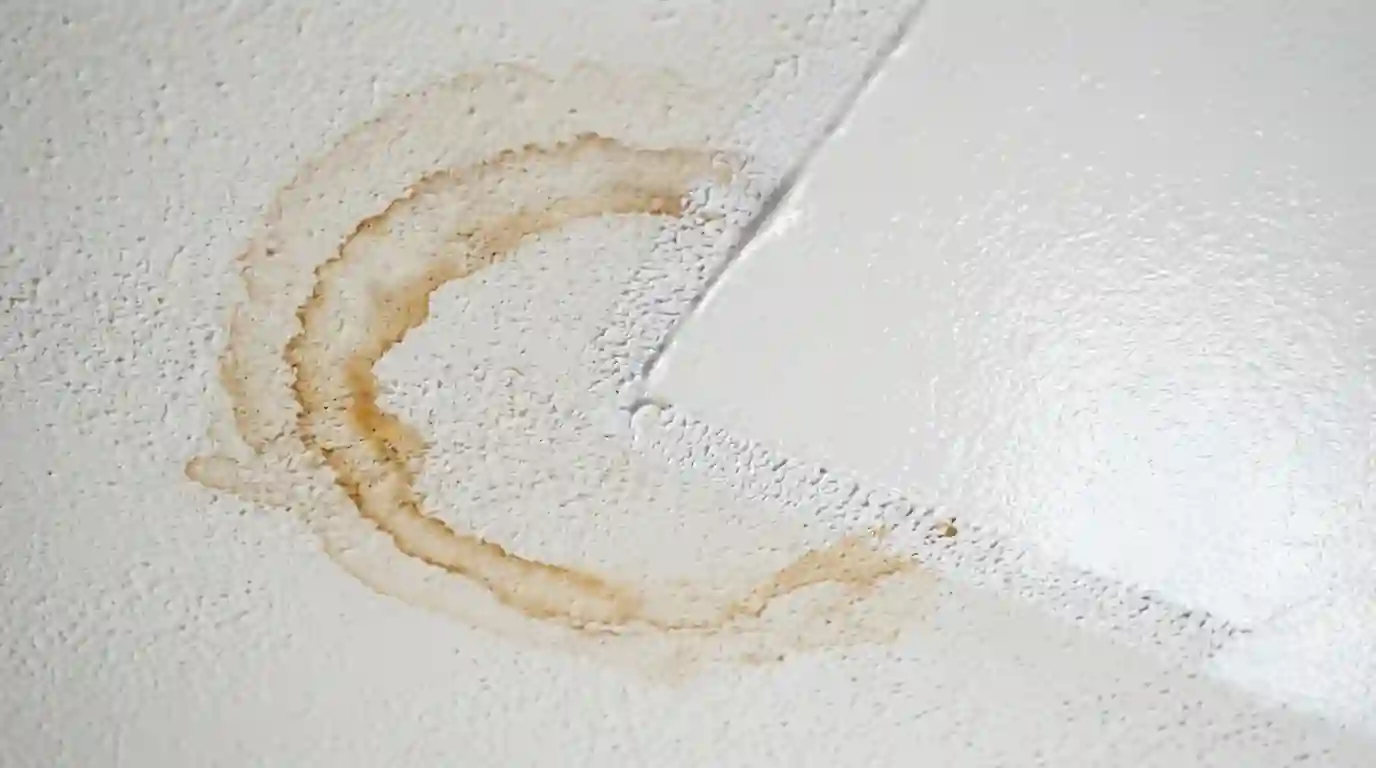
A brown ring from an old roof leak or an AC drain pan overflow will show through latex paint no matter how many coats go on. The tannins and minerals in the stain are water soluble, so a water-based paint simply reactivates them. We first confirm the area is dry with a moisture meter, then seal it with a shellac-based or oil-based stain-blocking primer. Aerosol versions work for small spots, while larger rings get brushed or rolled. Once that primer dries, the ceiling paint goes over the whole plane rather than just the patch, so there's no visible square of fresher white. If the drywall has sagged or crumbled, the stain needs a repair first, and our water stain ceiling repair page covers that work.
What ceiling painting typically costs in Fort Worth
$385 to $715
per typical 14 by 16 ft room with an 8 to 9 ft flat or lightly textured ceiling. Your price comes from a written scope after we see the job.
What moves the number
- Vaulted, coffered or two-story ceiling height
- Heavy knockdown or orange-peel texture
- Water stains needing a sealing primer
- Cracks where ceiling meets wall
- Fans, fixtures and recessed lights to mask
- Whether walls are painted at the same time
Textured ceilings take more paint and more care
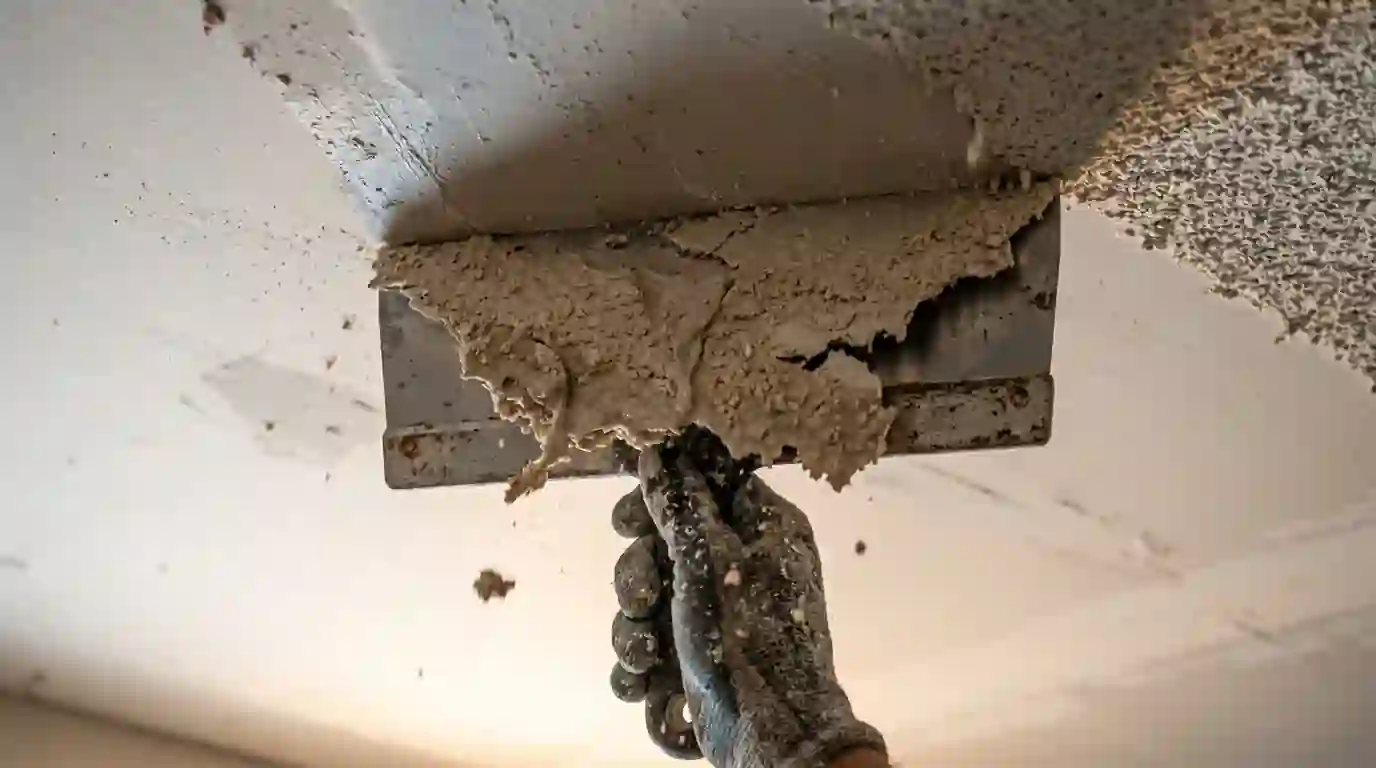
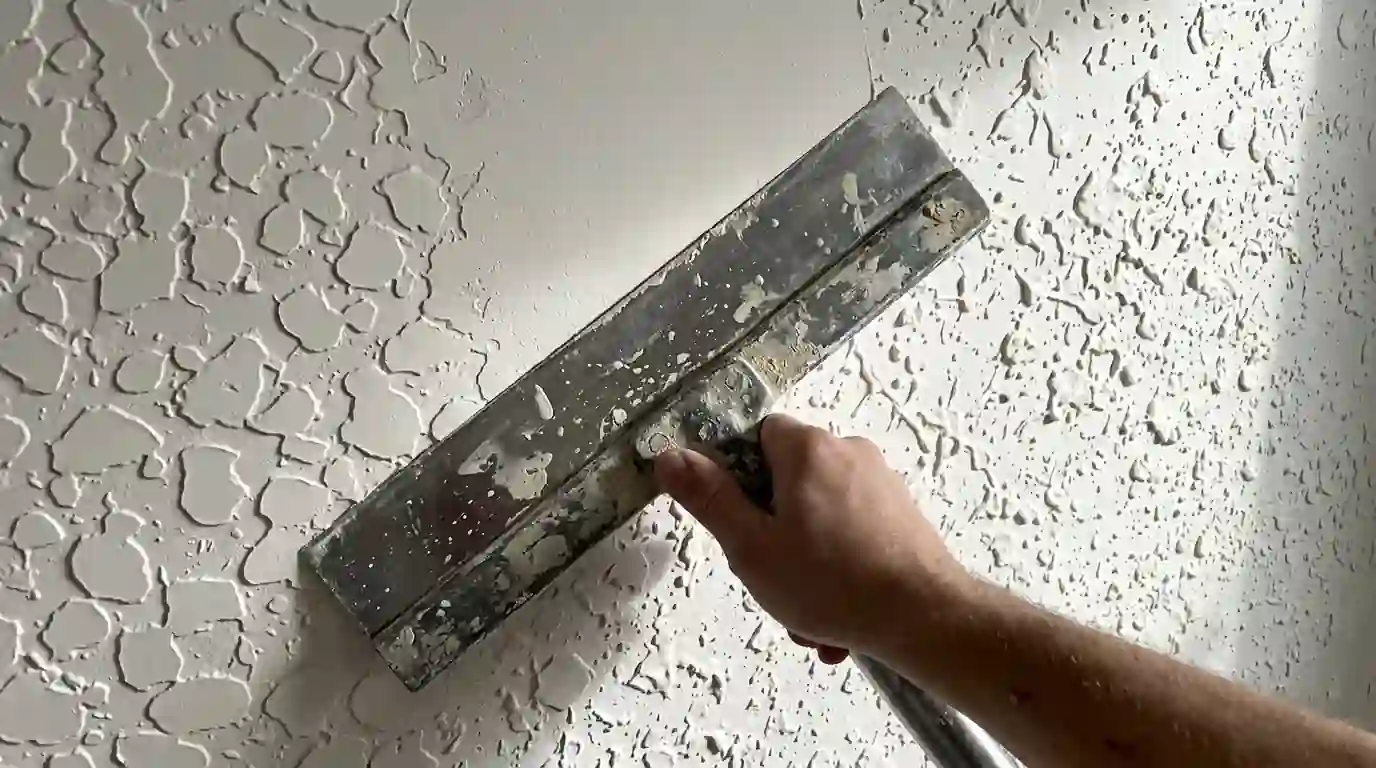
Many Fort Worth homes built from the 1980s onward have knockdown or orange-peel texture on the ceilings. Texture adds surface area, so it can use a third more paint than smooth drywall. We roll it with a thicker 3/4 inch nap cover that pushes paint into the valleys of the pattern, and we keep a wet edge across the full width of the room to avoid flashing. If the texture is loose or flaking in spots, we scrape and re-texture those areas before priming, so they don't peel off later under the weight of new paint.
Protecting floors and furniture from overhead spatter
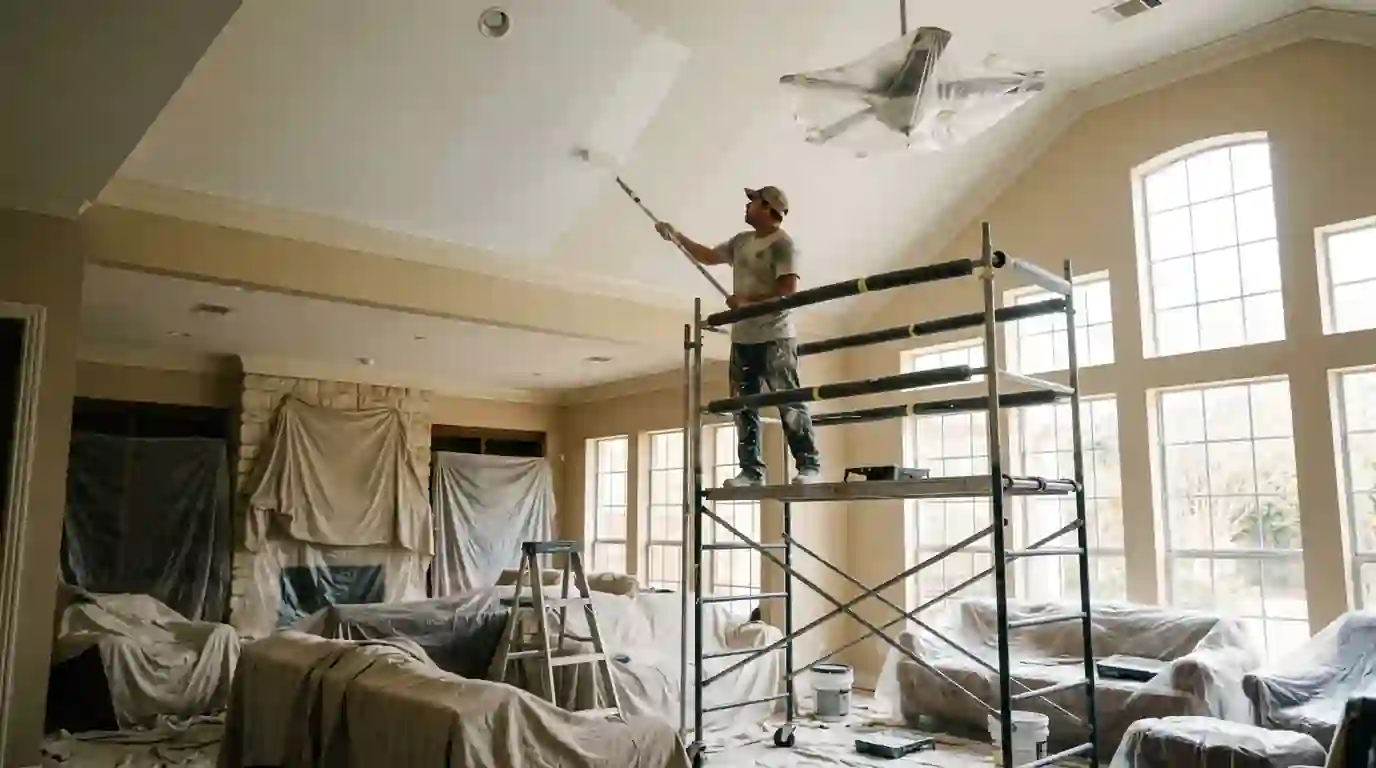
Ceilings throw more spatter than walls, so room protection is heavier. We clear the floor where we can and cover everything else completely, not just a perimeter. Light fixture canopies are loosened and dropped or bagged, ceiling fan blades are wrapped, smoke detectors are masked, and recessed light trims come out. When the walls aren't part of the job, we run a strip of low-tack tape along the top of each wall so the ceiling line stays clean. We paint the ceiling before the walls whenever both are in scope. Drips and roller mist land on surfaces that are about to be painted anyway, and the wall color can then be cut cleanly to the finished ceiling.
- Full-room plastic over furniture, not just edge drop cloths
- Fan blades wrapped and fixture canopies lowered
- Smoke detectors masked and recessed trims removed
- Low-tack tape at the wall line when walls stay as they are
What to expect on vaulted and two-story ceilings
Great rooms and entry foyers in 1990s and 2000s homes around Fort Worth often have ceilings 16 to 20 feet up. We set up scaffolding or an adjustable stair plank on padded feet rather than leaning ladders against fresh walls, and we plan the work so each pass is continuous from one end of the ceiling to the other. That keeps the finish uniform where the angle of the light changes along a vaulted slope. These rooms usually take most of a day by themselves.
Signs it is time for ceiling painting
- A faint yellow or gray film overhead from cooking, candles or an old fireplace
- Brown water rings left from a roof leak or overflowing AC pan
- Cracks running along the line where the ceiling meets the wall
- Visible patches from old fixture or fan relocations
- Shiny streaks where someone rolled wall paint onto the ceiling
- Flaking texture over a bathroom shower or near an attic hatch
How we handle ceiling painting, step by step
- 1
Inspect and test
We check stains with a moisture meter, look for loose texture and cracks, and test whether the existing finish is latex or oil so the right primer is chosen before work starts.
- 2
Cover the room
Furniture is covered fully, floors are protected wall to wall, fan blades are wrapped, fixtures are lowered or masked and smoke detectors are covered for the painting period.
- 3
Repair overhead
Cracks at the wall line are taped and filled, loose texture is scraped and patched to match, and old anchors or fixture holes are filled and sanded flush.
- 4
Seal stains
Water rings, smoke shadows and patched areas get a shellac or oil-based stain-blocking primer, allowed to dry fully before any finish paint touches the ceiling.
- 5
Roll two flat coats
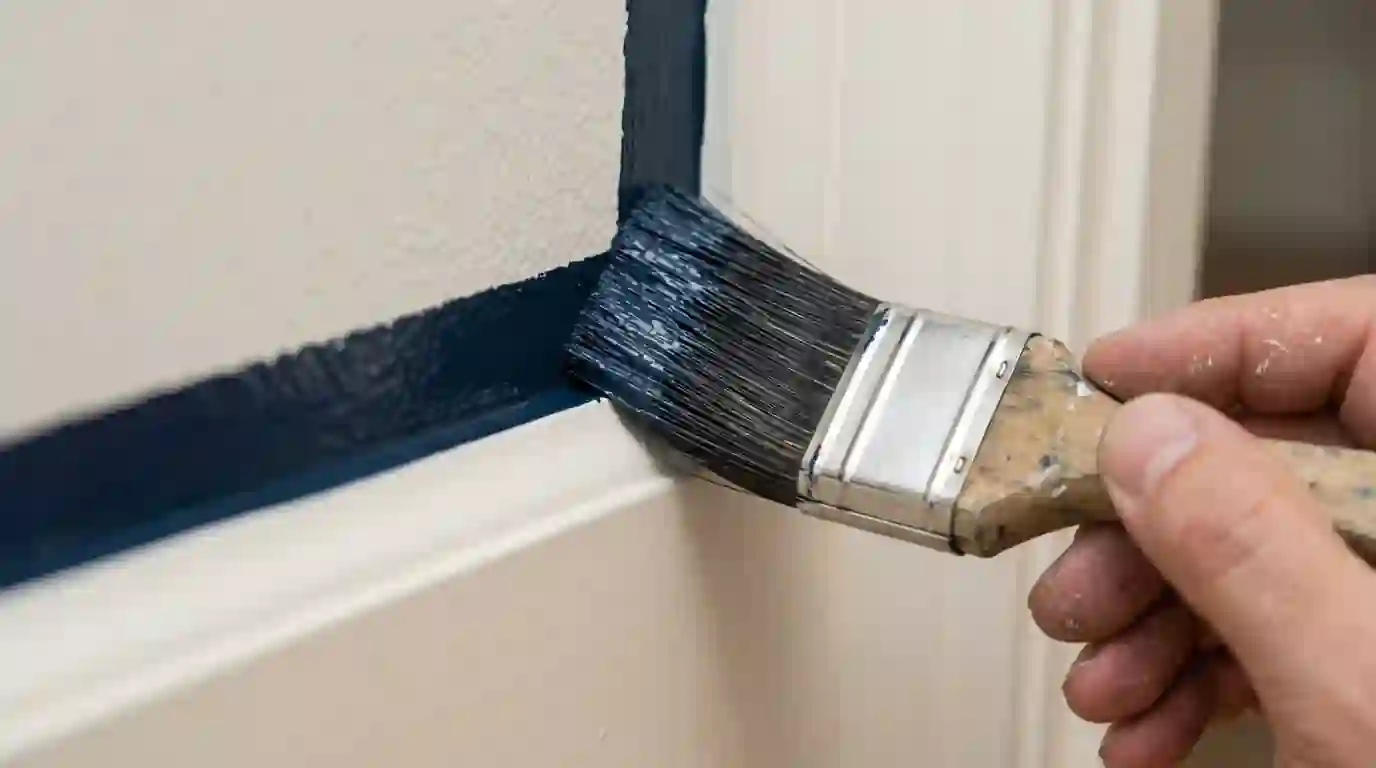
We cut the perimeter by brush, then roll the full ceiling in continuous passes with the light, keeping a wet edge, and repeat after the recommended recoat time.
- 6
Reset and inspect
Fixtures, fan blades and trims go back, coverings come down carefully, and we check the finished ceiling from several angles under both daylight and lamp light.
Fort Worth conditions that shape ceiling painting
Fort Worth ceilings take a beating from the climate in ways people don't always connect. Clay soil movement under the slab racks the framing slightly each season, and the weakest point is usually the tape joint where ceiling meets wall, so long straight cracks along that line are common. Summer attic temperatures well above 130F can stress drywall seams and cause nail pops directly below the joists. Spring storms that drive rain under shingles leave the brown rings we see on so many ceilings, often discovered weeks after the hail claim season. Because so many newer homes have big west-facing windows, late afternoon sun rakes across ceilings and reveals uneven rolling, which is why we finish with a dead-flat product.
Estimate the paint for one room
Enter the room size to get a rough gallon count for walls. It assumes two finish coats and subtracts a typical door and two windows. Textured and porous surfaces drink more paint.
Where we offer ceiling painting around Fort Worth
Across Fort Worth (76102 and surrounding ZIP codes), including Fairmount, Ryan Place, Mistletoe Heights, Arlington Heights, Tanglewood, Westcliff and other neighborhoods, plus these nearby cities and counties:
- Arlington 76010
- Grand Prairie 75050
- North Richland Hills 76180
- Mansfield 76063
- Euless 76039
- Grapevine 76051
- Bedford 76021
- Keller 76248
- Burleson 76028
- Haltom City 76117
- Hurst 76053
- Southlake 76092
- Weatherford 76086
- Saginaw 76179
- Colleyville 76034
- Benbrook 76126
- Tarrant County 76102
- Denton County 76201
- Johnson County 76031
- Parker County 76086