Stain types and how long each lasts in Texas sun
Fence stains differ mainly in how much pigment they carry. Transparent and clear toners contain little or no pigment, so they show the most grain but offer the least UV protection, often fading in 12 to 18 months on a sunny Fort Worth fence. Semi-transparent stains carry enough pigment to slow graying while letting the grain show, and they're the most popular choice for cedar and pine privacy fences here. Solid-color stains behave more like thin paint, hiding grain completely and lasting the longest, though they can peel if applied too heavily. Oil-based penetrating stains soak into the wood and wear away gradually, which makes recoating easy. Water-based stains clean up with water and dry faster, but older formulas sometimes sat on the surface. Many newer hybrid products combine oil penetration with waterborne cleanup.
- Transparent or clear toner: about 1 to 1.5 years
- Semi-transparent oil-based: about 2 to 3 years
- Semi-transparent water-based or hybrid: about 2 to 3 years
- Solid-color stain: about 3 to 5 years
How long to wait before staining a new fence
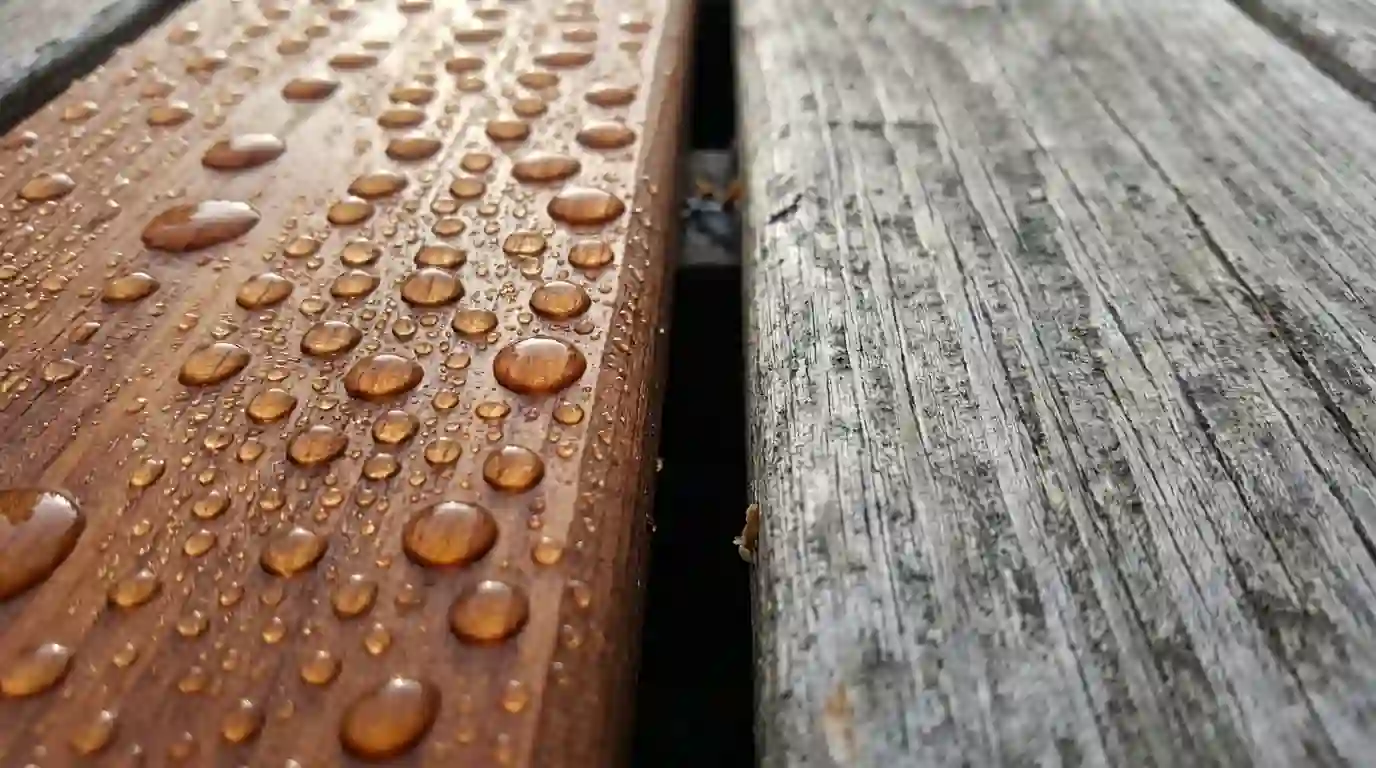
New fence boards usually arrive with high moisture content, especially pressure-treated pine, which can be soaked from the treatment process. Staining too soon traps that moisture and keeps the stain from penetrating, leading to blotchy color and early failure. In Fort Worth's warm, sunny weather, pine pickets typically need 4 to 8 weeks to dry enough, while cedar often needs about 4 to 6. A simple test is to sprinkle water on a board. If it beads, the wood still has mill glaze or moisture and needs more time or a light wash. If it soaks in within a few minutes, the wood is ready. On the other hand, waiting too long lets UV gray the surface fibers, which then need cleaning or brightening before stain will bond. Aim to stain within the first season.
Cedar vs pine fences: different woods, different schedules
Western red cedar and pressure-treated pine are the two most common fence woods in Fort Worth, and they age differently. Cedar has natural oils that resist rot and insects, a tighter grain and less tendency to warp, so it takes stain evenly and often goes a bit longer between coats. Untreated, it weathers to a silver gray in a year or two. Pine is less expensive and stronger for posts and rails when treated, but it's more prone to checking, splitting and cupping as it dries in Texas heat. Its open grain soaks up more stain on the first coat, sometimes needing two light coats. Pine also benefits more from a pigmented semi-transparent or solid stain to slow sun damage. In our experience, a well-stained cedar fence typically runs 3 years between coats, while pine is closer to 2.
Signs your fence is ready for its next coat
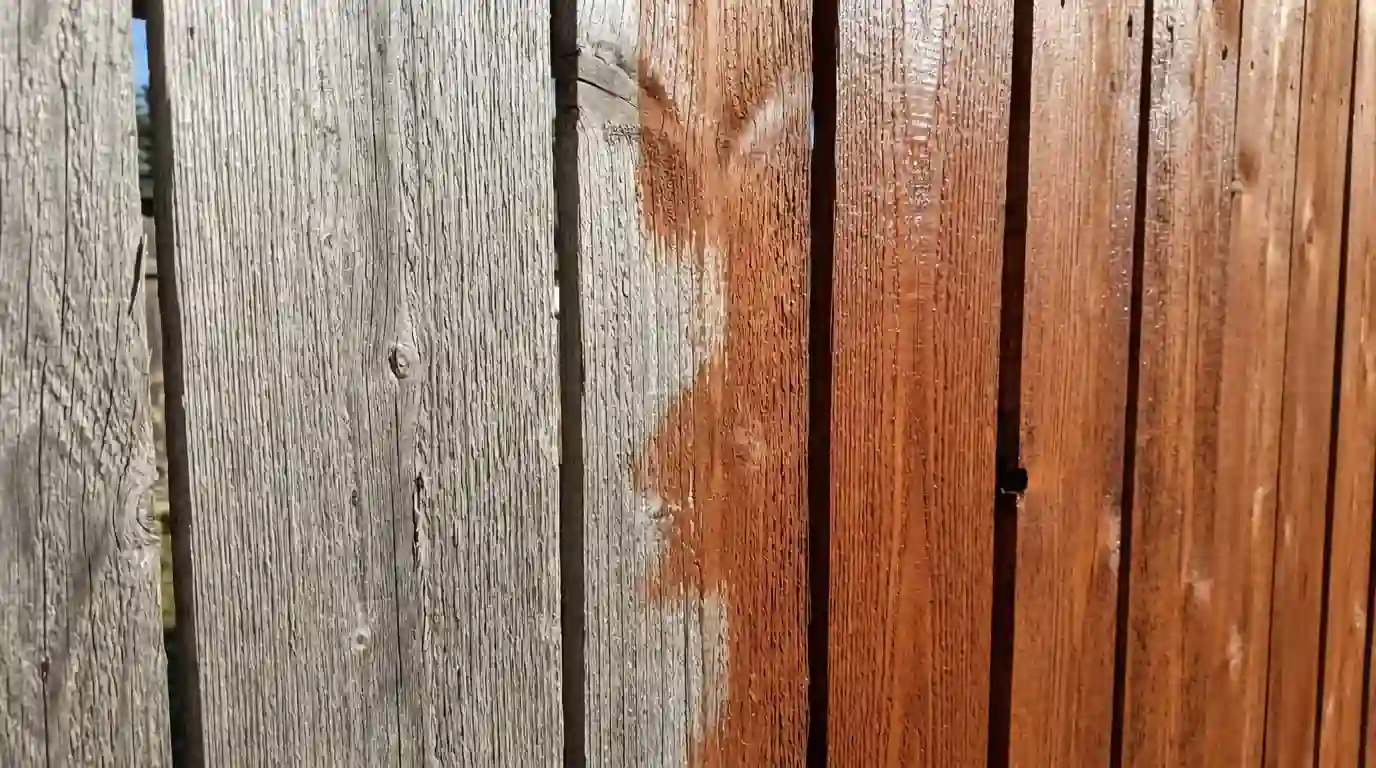
Rather than relying only on a calendar, watch the fence. The simplest test is the water drop test again: if water soaks in fast instead of beading, the stain's protection is mostly gone. Graying on the sunny side, where color has faded to a silver or tan, is another sign. Look for dark spots or green mildew near the ground, especially where sprinklers hit, and for cracks, splits or lifted fibers on the pickets. On solid-color stains, peeling or flaking along the board edges means it's time to recoat before bare wood starts weathering. Fences facing west or south often need restaining a year before the shaded runs. Restaining in time avoids heavy stripping or sanding, which raises the cost of the next job considerably.
- Water soaks in instead of beading
- Silver graying on sunny sections
- Mildew or dark staining near the ground
- Peeling edges on solid-color stain
- New checks or splits on pickets
Prep that makes fence stain last longer
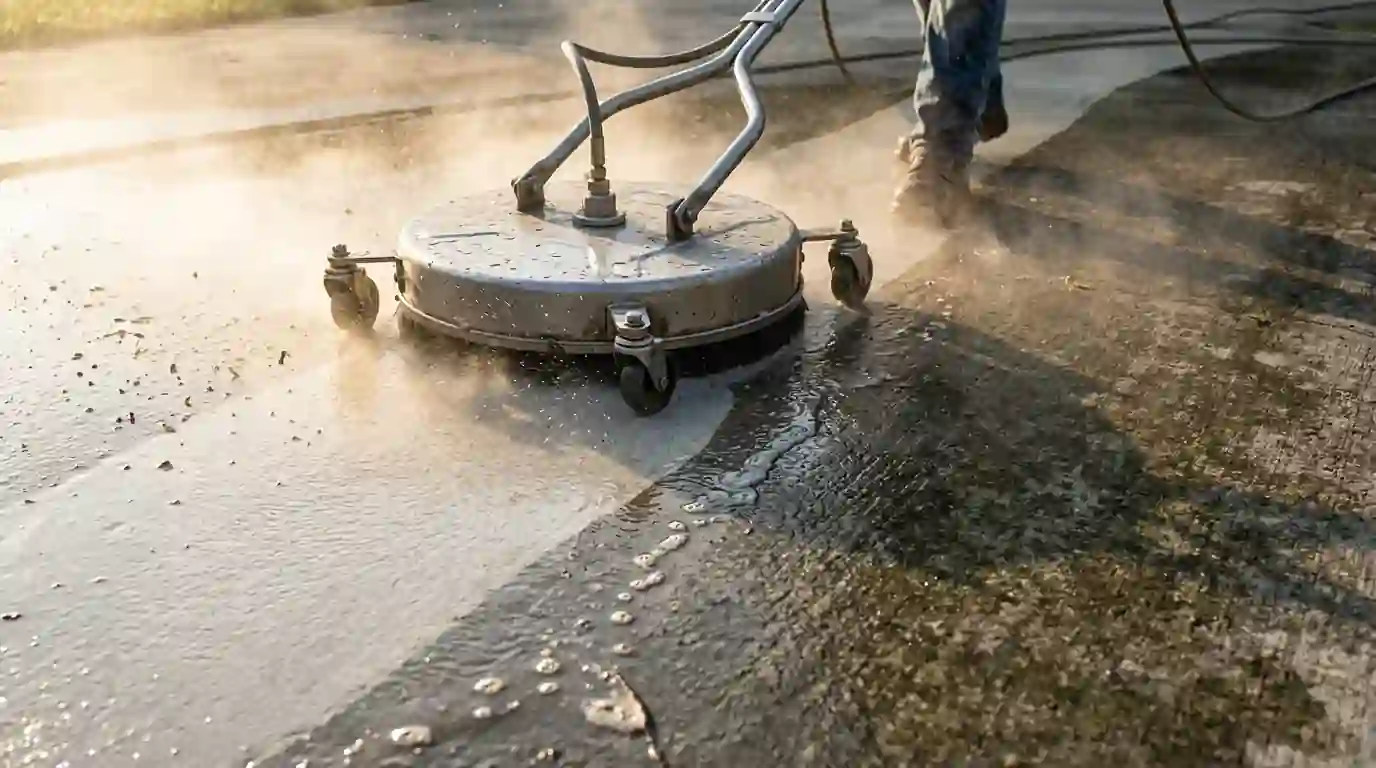
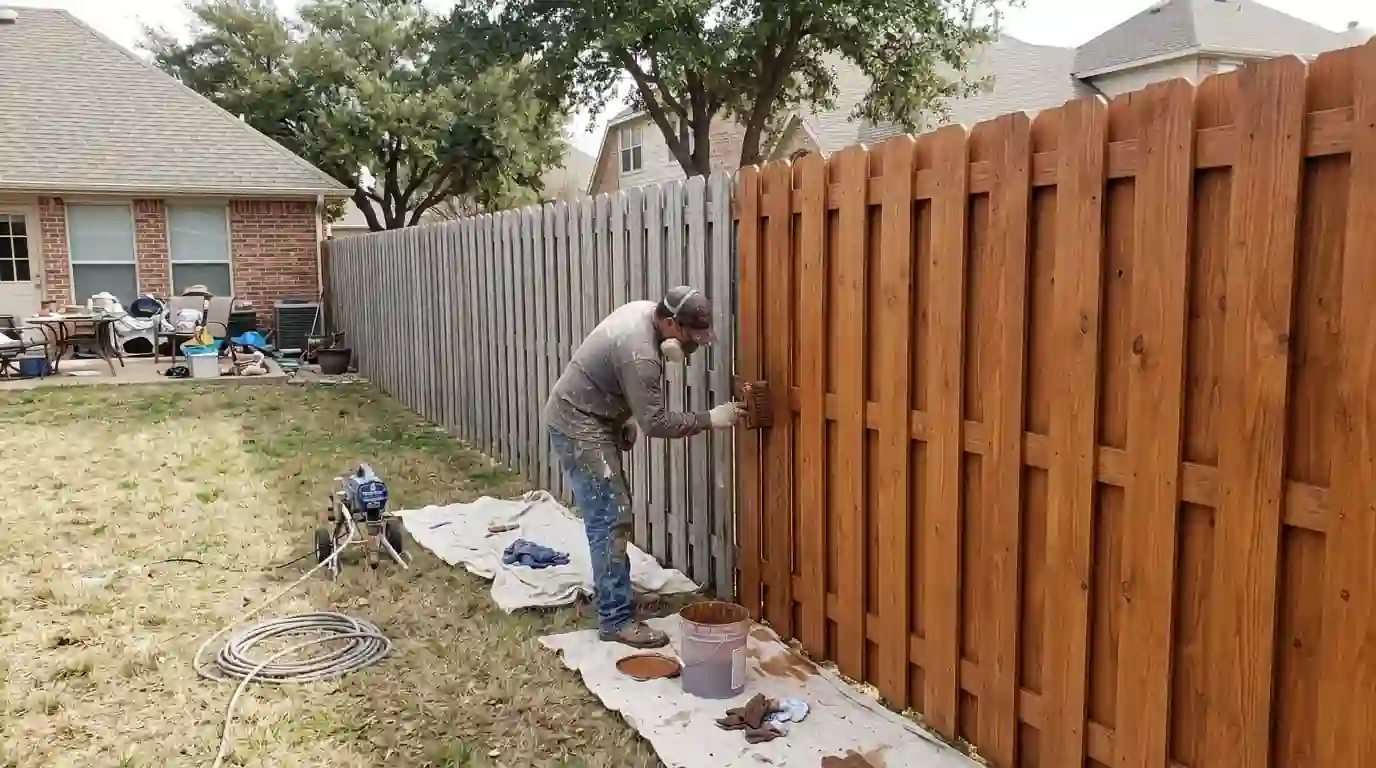
A fence stain is only as good as the surface it soaks into. Before staining, we clean the fence with a wood cleaner and a low-pressure wash, usually around 500 to 1,200 psi with a fan tip, to remove dirt, mildew and gray fibers without furring the wood. On weathered or older fences, an oxalic acid brightener restores the wood's natural color and neutralizes cleaner residue. The fence then needs at least 24 to 48 hours of dry weather before stain goes on. We protect plants, concrete and nearby siding with plastic and drop cloths, then apply stain with sprayers and back-brush it into the grain for even penetration. Loose pickets get reset with exterior screws, and severely split or rotted boards are replaced before staining so new wood isn't left bare.
Fort Worth conditions that shorten a stain cycle
Local weather and yard habits often decide whether you get two years or four. Intense UV on south and west fence runs fades pigment faster than on shaded runs. Daily sprinkler spray keeps the bottom foot of pickets wet, encouraging mildew and rot and breaking down stain. Expansive clay soils heave posts out of plumb, opening gaps and loosening pickets so water gets into the end grain. Hail in spring can scuff stain off the windward face. Dogs running along a fence line wear the bottom boards. Even shade from live oaks has a downside: it slows drying after rain and can promote mildew. Most fences show this uneven wear clearly, which is why some homeowners restain the sunniest sections more often and do the full fence on alternate cycles.
What fence staining typically costs in Fort Worth
Fence staining is priced mostly by linear footage and height, plus the condition of the wood. For a typical 6 ft privacy fence in Fort Worth, staining one side often runs about $2.35 to $4.60 per linear foot, and both sides roughly $3.95 to $7.40. A common 150 ft backyard fence stained on both sides might land around $1,750 to $3,500, depending on cleaning needs, board-on-board versus single-picket construction and stain type. Fences with heavy gray weathering, mildew or old peeling solid stain need extra prep, which raises the price. These are typical ranges, not quotes. Restaining on time is the best way to keep costs down, since each coat goes on faster when the previous one hasn't fully failed. Call us and describe the fence length, height and wood type.